
 En
 Español
 русский
 عربى

Wholesale Protective Gear Kit Buying Guide: Sizing, Standards and Kit Assembly
Date:Nov 20, 2026
Content
- 1 What Actually Goes Into a Wholesale Protective Gear Kit
- 2 Match the Kit to the Product on the Same Shelf
- 3 Helmet Pairing Decides Whether the Kit Sells as a Set
- 4 Sizing, Adjustment Range and Fit Tolerance
- 5 Certificates and Paperwork Buyers Ask For
- 6 MOQ, Packaging and Lead Time: Fix These Before Sampling
- 7 Incoming Inspection Checklist for Kit Shipments
- 8 Wholesale Protective Gear Kit FAQ
A buyer for a European sports chain orders 3,000 six-piece protective gear kits, approves samples in three weeks, and then loses the season because the wrist guards in size S close only to 26 cm — two centimetres short of what the chart on the box promises. Nothing about the foam or the plastic cap caused the problem. The tolerance did.
That is how most wholesale protective gear kit programmes fail: rarely on the pads themselves, usually on three things — coverage that matches the sport, an adjustment range that genuinely fits the age band printed on the packaging, and paperwork that clears the destination market. Fix those first and price becomes a normal negotiation. Skip them and the cheapest quote on the table turns into the most expensive order in the file.
What Actually Goes Into a Wholesale Protective Gear Kit
A kit is a bundle of six to eight low-cost parts, so buyers tend to start with unit price and work backwards. The more useful starting point is the component list, because that is where cost can be removed without touching safety — bag printing, mesh weight, strap width — and also where it must not be.
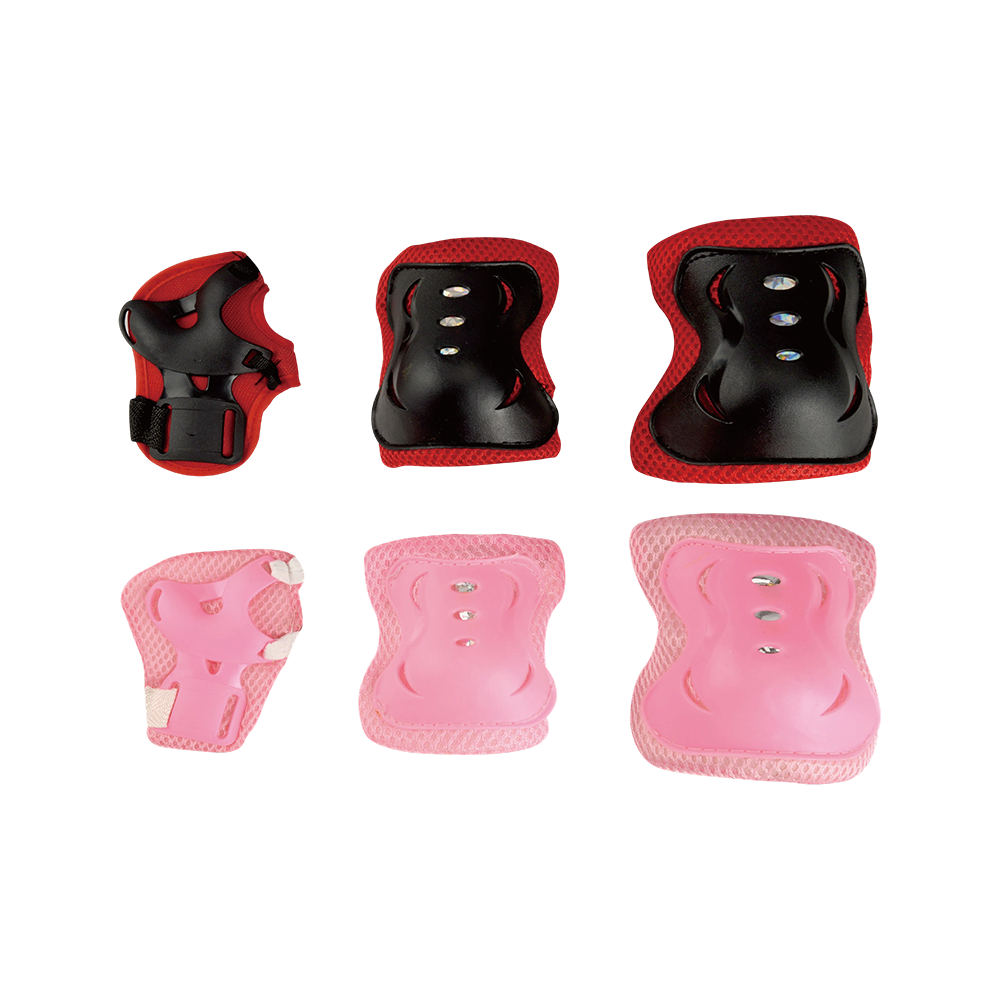
- Knee pads: hard PE or PP cap bonded to an EVA shell, with high-elasticity foam against the skin.
- Elbow pads: lighter cap, shorter sleeve, the same strap logic as the knee.
- Wrist guards: splint above and below the palm — the part that takes the first impact in a fall on inline skates.
- Straps and sleeves: elastic band, hook-and-loop closure, breathable knit sleeve for ventilation.
| Component | Typical build | What to verify before approval |
|---|---|---|
| Knee pad shell | PE or PP cap over EVA | Cap thickness and cold-bend behaviour at 0 °C |
| Foam liner | EVA plus high-elasticity foam cotton | Compression set after repeated loading |
| Wrist guard | Plastic or nylon splint with two straps | Splint stiffness and strap anchor strength |
| Closure system | Elastic band with hook-and-loop | Closure life and stitch density at the anchor points |
| Mesh sleeve | Breathable knit, multi-sport cut | Air permeability and colour fastness to rubbing |
| Carry bag | Non-woven or PE bag with print | Size chart accuracy, warning text, barcode placement |
For children's ranges, the fastest route is a purpose-built multi-sport set rather than four separate SKUs. Our children's sports safety protector line is built around that idea, with one mould family covering knee, elbow and wrist so the packaging stays consistent across sizes.
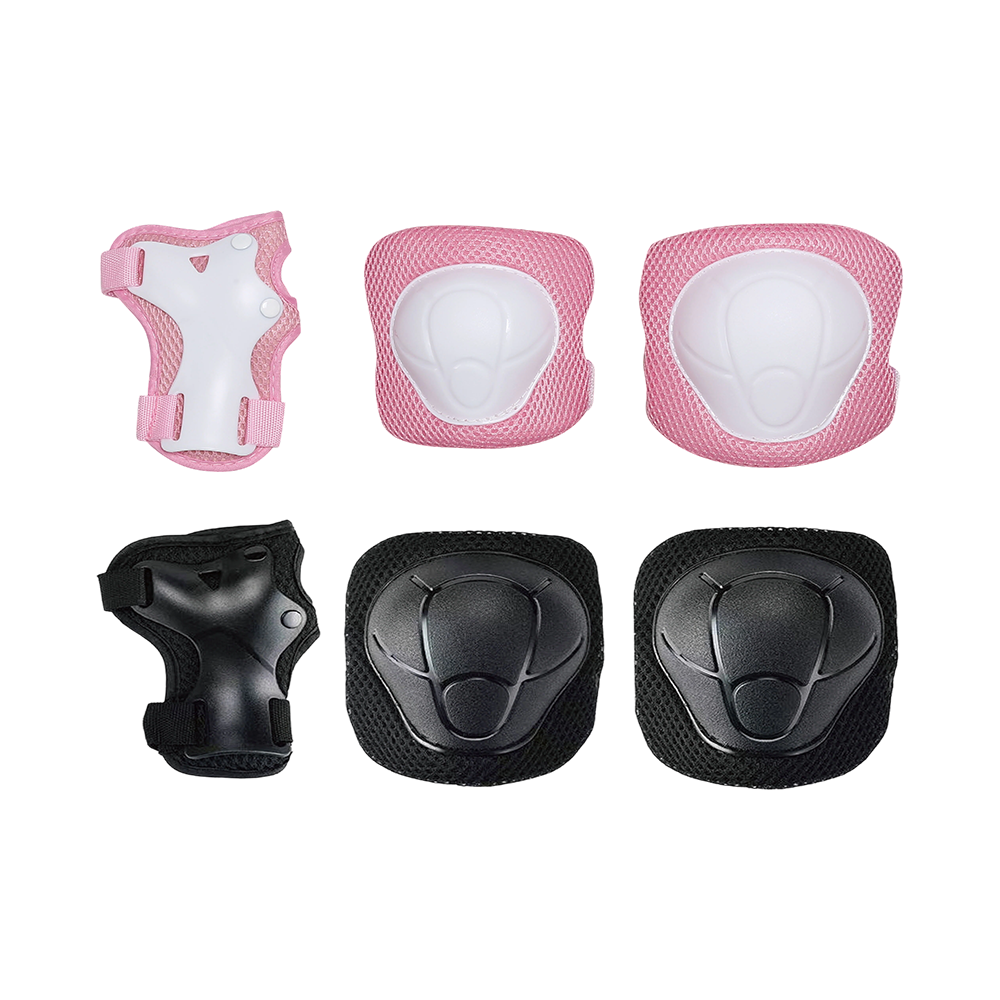 BW-03 Children's Knee and Elbow Protector SetAn entry-level first set for ages 3–12, with hard-shell knee and elbow pads, soft lining and Velcro closures for independent wear.View Product →
Match the Kit to the Product on the Same Shelf
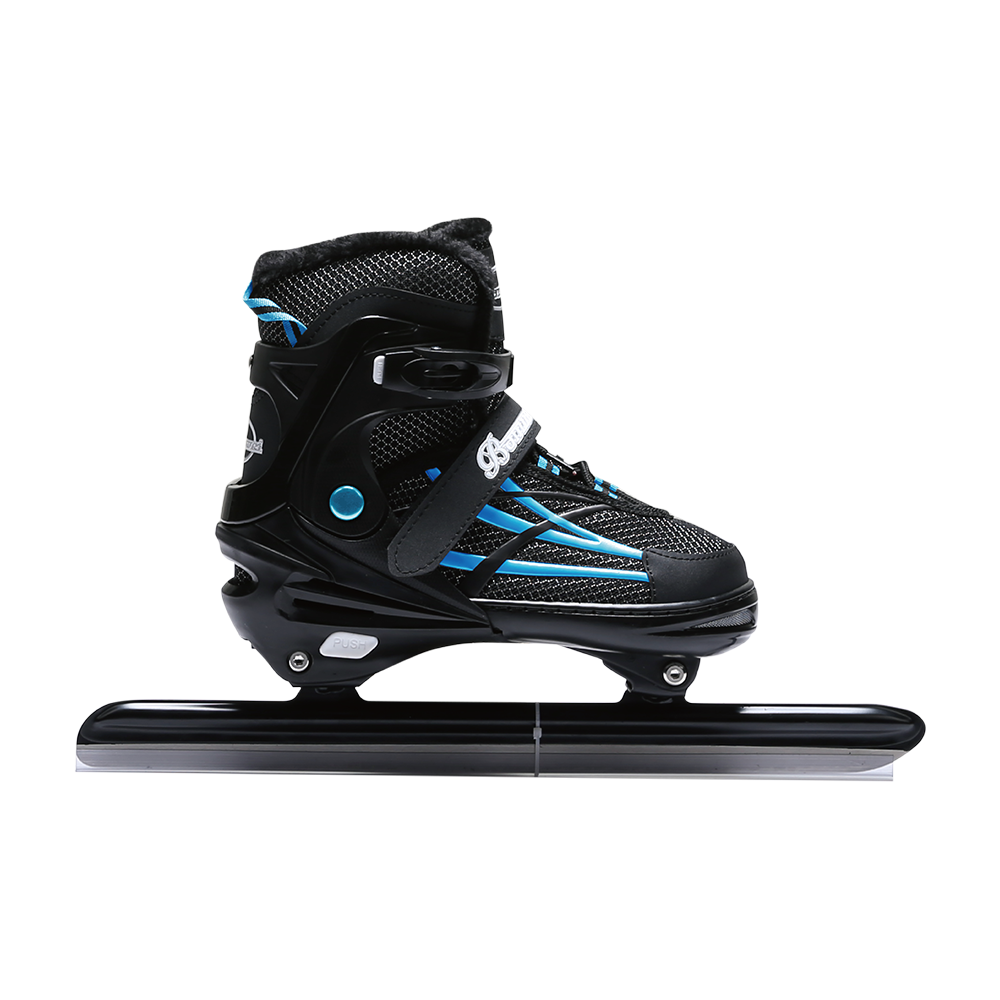
Coverage follows the sport, not the catalogue page. Beginner inline skating produces wrist injuries far more often than knee injuries, so a kit bundled with entry-level inline skates should lead with a rigid wrist splint and a longer sleeve. Scooter use is different: riders step off, trip and hit knees and elbows, so wider caps matter more than wrist stiffness. Ice skates sit in between and usually ship with slimmer pads that fit under trousers.
Two practical consequences follow. First, do not ship one universal kit across three sports categories unless the wrist guard is the strongest component in the box. Second, keep the packaging artwork in one colour family across the range so retailers can build a display wall without re-planning the shelf. If you are still deciding which sports to pair, the guide to choosing sports protective gear walks through the coverage logic sport by sport.
Helmet Pairing Decides Whether the Kit Sells as a Set
A kit with a helmet reads as a complete gift set; a kit without one reads as an accessory. That single difference often decides whether a retailer gives you a four-foot shelf or a hook.
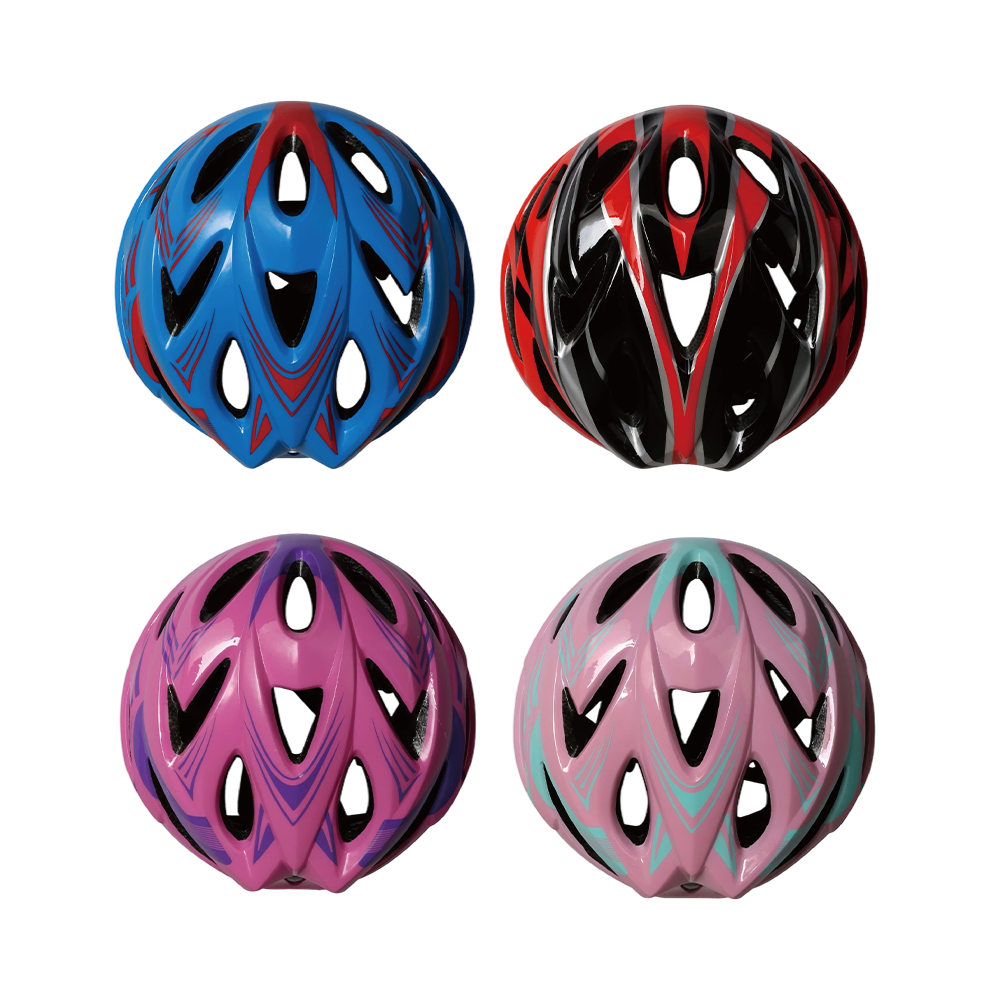
On the helmet, three specifications do most of the work. Liner density: high-density EPS holds its shape in a knock and is the first thing an audit team squeezes. Ventilation: moulded channels and rear exhaust ports keep a child wearing it in summer, which is when most kits are returned unused. Retention: a rear dial or a strap splitter that holds the shell steady when the head turns, without pinching above the ears.
Weight is the spec buyers forget. A kids half-shell above roughly 300 g starts to droop forward on smaller heads, and the parent notices within a week. A streamlined half-shell with a high-impact-resistant cap and adjustable rear fit solves both the price objection and the fit objection in one mould.
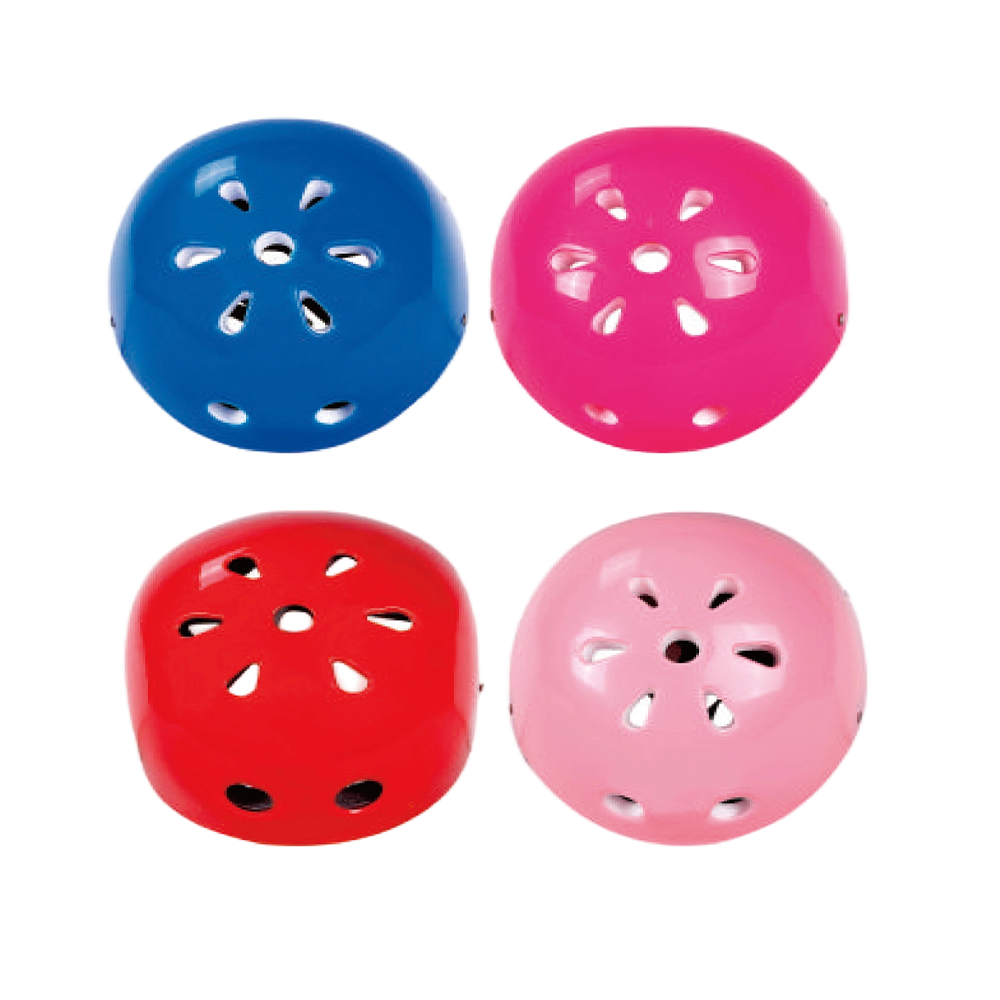 BW-013 Full-Face High-Impact Safety HelmetA full-face option with ABS shell, cushioning layer and anti-fog PC goggles, useful where the range covers higher-risk riding and water-sport protection.View Product →
Sizing, Adjustment Range and Fit Tolerance
Age bands on packaging are marketing; circumference is engineering. The reliable way to build a size run is to define a knee circumference window per size and then confirm the straps overlap at both ends of that window. A strap that only just closes at the smallest setting will slip once the elastic relaxes 5–8% after a few weeks of use — and that is the complaint that reaches the retailer, not the factory.
Adjustment range beats the number of sizes
Three sizes with 6 cm of usable adjustment usually outperform five sizes with 2 cm, because stock depth per size matters more to a distributor than a perfect fit in theory. Keep at least 30% overlap on the hook-and-loop when the strap is at its shortest, and print the range on the bag in the shopper's language. For multi-sport programmes, an adjustable-elasticity protector mould lets one body cover two adjacent sizes without a second tooling cost.
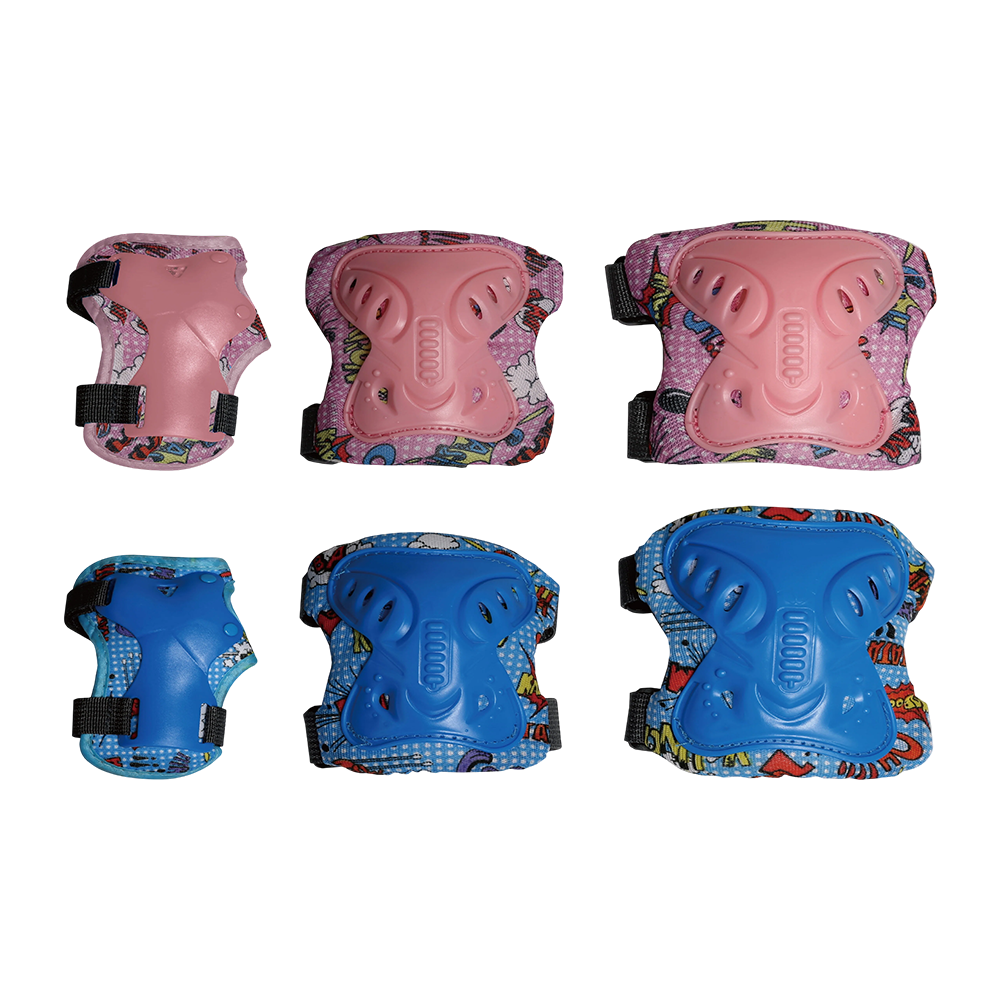 BW-06 Adjustable Elasticity Protective GearTwo-strap adjustable protector with a rigid shell and elastic fit, suited to multi-sport, training and industrial protection where fit and strap security matter.View Product →
Certificates and Paperwork Buyers Ask For
Certification is checked per model, not per factory. A test report that names a different SKU from the one on the carton will stall at customs or at the retailer's supplier audit, and it will not be fixed by a phone call. Keep the model number on the report, the carton and the invoice identical.
| Market | Commonly requested | Practical note |
|---|---|---|
| European Union | CE marking, limb protector test reports, helmet reports, EN 71 for toy-adjacent parts, labelling in the local language | The report must name the exact model and size range shipped |
| United States | CPC issued against CPSIA requirements, helmet test reports for skate use | CPC data must match the SKU printed on the carton |
| Middle East and Latin America | Certificate of conformity through a local scheme, Arabic or Spanish artwork | Label artwork often needs pre-approval before production |
Ask for the report pack with the quotation, not with the purchase order. Factories that hold ISO 9001, BSCI and the main product certificates can usually send the set within a day; if it takes a week, the model you are buying may be new to the certification file.
MOQ, Packaging and Lead Time: Fix These Before Sampling
Most MOQ friction in this category comes from packaging, not from pads. Stock colours with a neutral bag ship in small runs; custom printed bags, hang tags and shrink-wrap trays push the minimum up because of setup cost on the print line. Decide the packaging format before you fall in love with the sample.
For test orders and mid-season top-ups, work from what is already boxed rather than opening a production slot. Our ready-to-ship programme exists for exactly that purpose, and it is the honest way to test a market without committing to a full tooling cycle.
Incoming Inspection Checklist for Kit Shipments
- Pull each strap to a firm, steady load and watch the stitching at the anchor — no more than 2 mm of give.
- Flex every hard cap by hand; cracks or whitening at the edge mean the material is too brittle for cold-weather use.
- Press the foam and release; it should recover within a few seconds, not stay flattened.
- Compare the size printed on the bag with the physical fit on a measuring form at the smallest and largest settings.
- Check the helmet retention dial through its full range and confirm the chin strap cannot be adjusted past the marked limit.
Wholesale Protective Gear Kit FAQ
Should a kids kit include a helmet?
If the kit is sold as a gift or a starter set, yes — a helmet is what makes the set feel complete. If it is a replacement-parts SKU for a retailer that already stocks helmets, keep it separate so you do not force them to duplicate stock.
How many sizes should a children's range cover?
Three sizes with generous adjustment usually beat five tight ones. Define each size by knee circumference first, then confirm the straps overlap at both ends of the window.
Can the kit be private labelled?
Yes, and the practical limit is packaging rather than product. Printed bags, hang tags and barcodes are the usual drivers of minimum order quantity, so settle artwork early.
Before you compare quotes, write down three numbers: the knee circumference range your market actually sells, the coverage priority for the sport the kit ships with, and the exact document set the destination requires. Send those three to a manufacturer and the conversation becomes specific in a way that a price list never does — and the kit you receive in six weeks is the kit you approved on paper.
Recommended Articles

Get in Touch
Your email address will not be published. Required fields are marked *
Have a project in mind? Contact with us!
We are happy to answer your questions. Please fill out this form
and one of our professional team will get back to you as soon as possible.

We specialize in producing various types of children's toy cars, children's skateboards, and ice skates.
