
 En
 Español
 русский
 عربى

Wholesale Certified Helmet and Protective Gear Company: A Sourcing Guide
Date:Nov 13, 2026
Content
- 1 What Certified Means for Wholesale Helmet and Pad Buyers
- 2 Helmet Details That Decide Returns, Fit, and Reorder Rates
- 3 Protective Gear: Where Material Choice and Fit Drive Repeat Orders
- 4 Factory Controls That Matter More Than a Catalog Photo
- 5 Order Planning for Helmets and Protective Gear
- 6 FAQ for Wholesale Helmet and Protective Gear Sourcing
- 7 Next Step: Build a Certified Program, Not a One-Off Order
A retail buyer comparing two helmet samples can easily miss the real difference. Both may have a molded shell, EPS liner, and a similar finish, yet only one arrives with test reports that match the destination market. That gap is why a wholesale certified helmet and protective gear company should be judged on documentation, process control, and model consistency, not on a single sample photo. The short answer: buy from a factory that can connect each helmet or pad model to a defined standard, an internal quality step, and a repeatable production route. Certification without factory control is a paper promise; factory control without current test evidence is a commercial risk.
What Certified Means for Wholesale Helmet and Pad Buyers
Certification is product-, market-, and sometimes size-specific. A CE mark for a helmet does not automatically cover a different shell size, a changed buckle, or a new liner density. Buyers should ask for the standard, the report number, the model list, and the date. For a helmet program, the common checks include impact absorption, retention system strength, and coverage area. For pads, fit and abrasion resistance matter, along with materials that stay comfortable during use.
A practical review looks at the factory system and the product certificate together. The factory should be able to show ISO9001 quality management, social compliance such as BSCI, and product evidence such as CE, EN71, ASTM, EMC, EN62115, EN13843:2009, or 3C where relevant. The exact mix depends on the item and the market. EN13843, for example, is associated with inline skating protective equipment, while EN71 addresses toy safety for products that may be classified as toys. A helmet sold for skate or scooter use needs its own standard review.
| Credential | What it tells a buyer | Where it matters |
|---|---|---|
| ISO9001 | Quality management system is documented and auditable. | Factory selection and repeat-order consistency. |
| BSCI | Social compliance has been reviewed against a recognized audit framework. | Retail and brand supply-chain requirements. |
| CE | Product claims conformity with applicable European requirements. | Helmets and protective gear for EU markets. |
| EN71 | Toy safety considerations have been addressed where applicable. | Children's products that may fall under toy rules. |
| ASTM | Model has been tested against a relevant ASTM standard. | US market programs and retailer reviews. |
| EN13843:2009 | Protective equipment for inline skating has been assessed to this standard. | Skate and scooter protective gear sets. |
| 3C, EMC, EN62115 | Applicable electrical, toy, or market-specific requirements have been reviewed. | Items with lights, electronics, or child-appeal features. |
Helmet Details That Decide Returns, Fit, and Reorder Rates
Helmet construction looks simple until a program scales. The shell shape affects coverage and appearance. The EPS liner density affects impact energy management. The vent layout affects heat build-up and how the helmet sits on a child's head. The retention dial, straps, and buckle determine whether the helmet can be adjusted securely without pinching. For wholesale orders, the risk is not only a failed test. It is a size run that fits unevenly, a liner that changes feel after a molding batch, or a buckle that is difficult for parents to adjust.
A factory with in-house tooling, injection molding, sewing, and assembly can control these variables earlier. Ningbo Feile Sporting Goods Co., Ltd., founded in 2010, operates a 20,000-square-meter workshop with more than 200 employees and five automatic production lines. Its helmet range includes models BW012 to BW017, covering strong EPS, high-impact resistance, ventilation, high-density EPS liners, streamlined half-shell shapes, and stable fit systems. Those labels are not marketing decorations; they point to the design choices buyers should sample and compare.
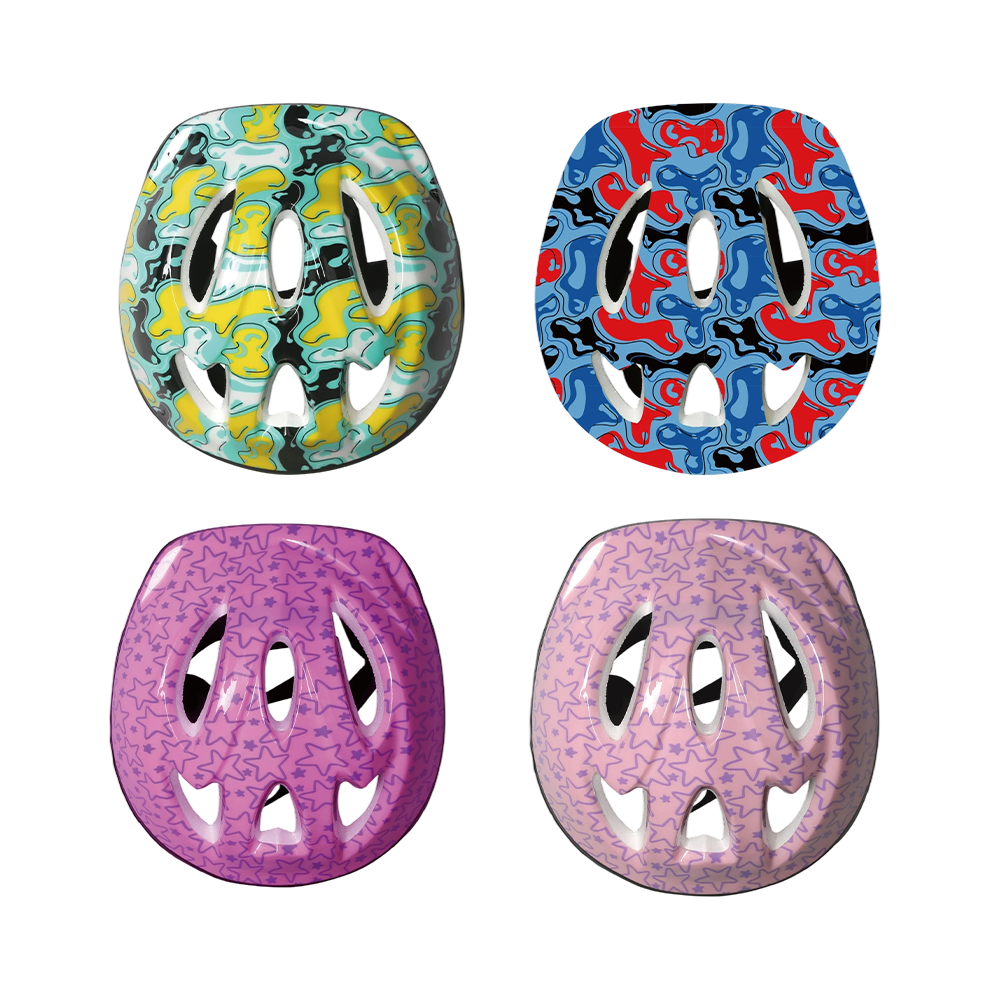 BW-012 Strong EPS Helmet for Lightweight Head ProtectionA lightweight PVC and high-density EPS helmet for children’s cycling, skateboarding, and light-duty use, worth sampling for fit, ventilation, and model control.View Product →
When comparing samples, test the same size on several head forms and check strap routing with the helmet seated, not loose in the hand. Confirm that the rear cradle tightens without lifting the front edge. Ask for the model's current test report and check whether a color, buckle, or liner change triggers a new test. For a wholesale certified helmet program, model control is as important as the certificate itself.
Ventilation is another sample point. A helmet can look well vented and still trap heat if the liner blocks the channels. The BW014 superior ventilation model is a useful reference when a buyer needs a helmet for warm-weather scooter or skate use. Test it during active wear, not only on a desk, and check whether the front pad leaves pressure marks after twenty minutes.
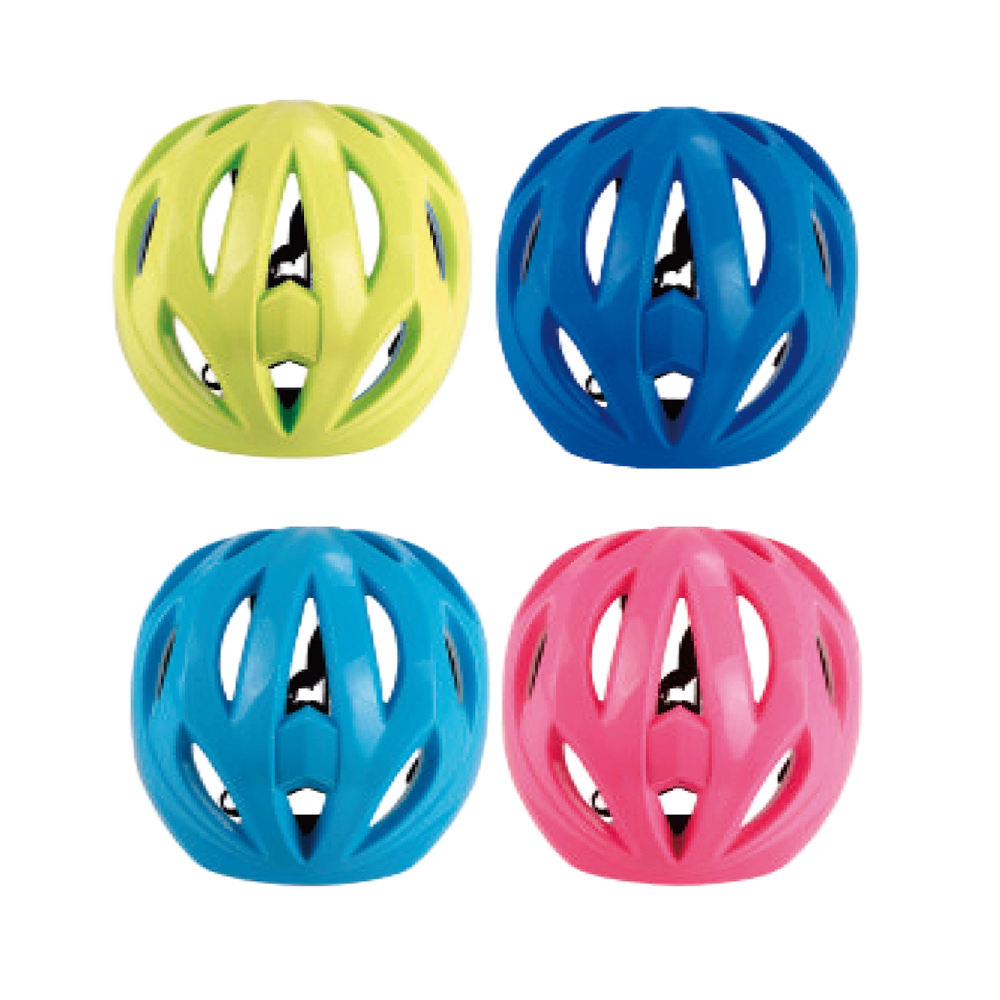 BW-014 Ventilated Helmet for Warm-Weather RidingA lightweight PVC and EPS helmet with aerodynamic vents and soft lining, suited to hot-weather commuting and worth checking for airflow and fit.View Product →
Protective Gear: Where Material Choice and Fit Drive Repeat Orders
Pads are often treated as an accessory to a scooter or skate order, but they carry their own return risk. EVA foam and high-elasticity foam cotton feel different on the leg and wrist. A breathable backing helps during warm-weather use. Adjustable elasticity affects how long a child can wear the set across growth stages. A three-piece set that slips, rolls, or traps heat will generate complaints even if the plastic cap passes a basic impact test.
Feile's protective gear range includes BW02 to BW07, with models built around EVA and high-elasticity foam cotton, children's sports safety, multisport use, three-dimensional design, adjustable elasticity, and breathable construction. The right wholesale specification should define the pad thickness, cap material, strap width, and size range. Buyers should also confirm labeling, packaging, and whether the set is sold as children's equipment or as a toy, because that changes the test route. The sports protective gear range gives buyers a starting point for matching helmets, wrist guards, knee pads, and elbow pads into one program.
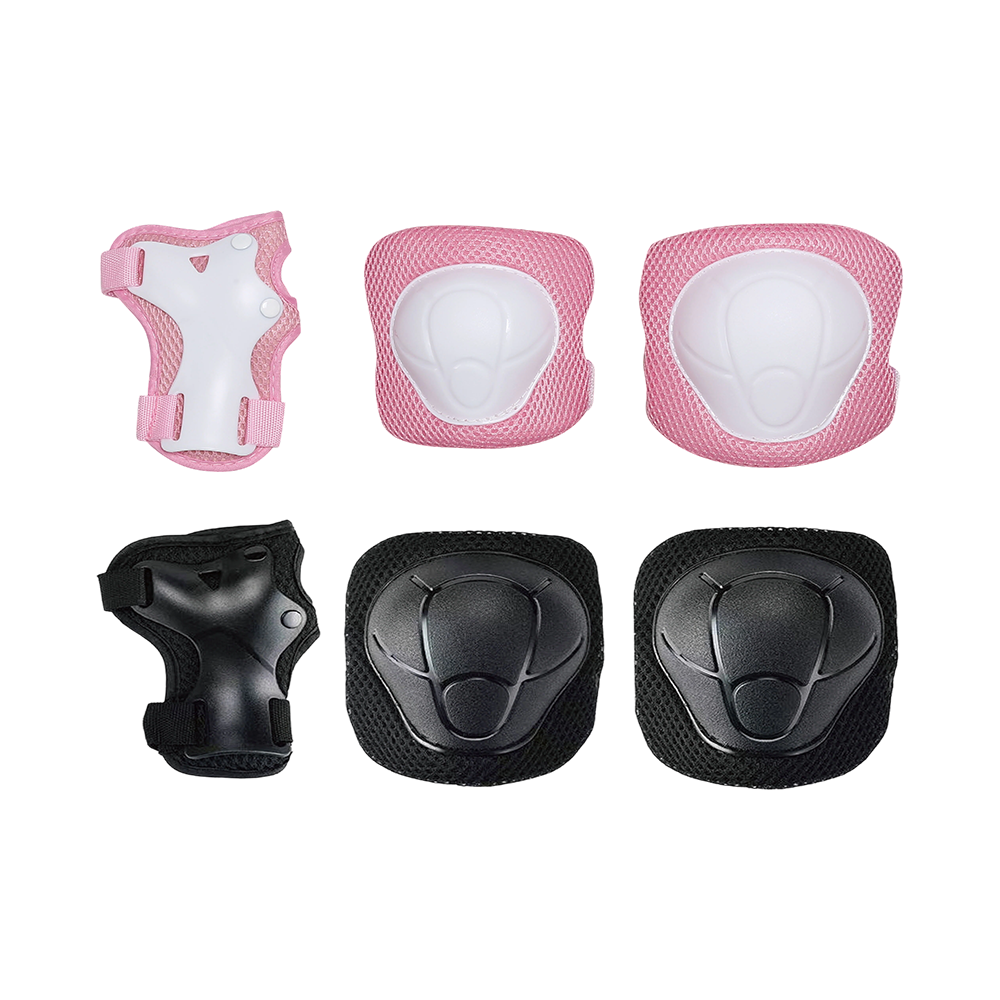 BW-03 Children’s Knee and Elbow Protector SetAn entry-level EVA and PE knee-and-elbow set for children aged 3–12, worth reviewing for fit, adjustable closure, and everyday multisport protection.View Product →
A useful sample test is to have a child-size mannequin or a small wearer try the set over typical clothing. Check whether the straps stay flat, whether the knee cap tracks with the kneecap, and whether the wrist guard allows a natural grip. These practical checks catch problems that a certificate alone will not reveal.
Factory Controls That Matter More Than a Catalog Photo
A helmet or pad catalog shows the outside. A factory audit should show the inside. The useful questions are who owns the mold, how liner density is checked, how shell color is matched, how straps are stitched and pull-tested, and how finished goods are sampled before packing. A supplier that controls injection, sewing, and assembly under one roof has fewer handoff points than a trading company that only sources finished goods.
Ningbo Feile Sporting Goods operates mold, injection, sewing, and assembly workshops in Yuyao, Zhejiang. The company reports ISO9001, BSCI, and retailer factory audit experience, along with multiple national patents and a professional R&D team. Its product certificates include 3C, CE, EN71, EN62115, ASTM, EMC, and EN13843:2009. For a buyer, those facts should lead to specific requests: the latest audit summary, the test report for the exact model, the liner specification, and the corrective-action process if a sample fails.
- Ask for a model-to-certificate matrix, not a folder of unrelated certificates.
- Request a signed golden sample and keep it with the purchase order.
- Confirm who approves changes to shells, liners, straps, buckles, and packaging.
- Check whether pull tests, fit checks, and packing inspections are recorded by batch.
Order Planning for Helmets and Protective Gear
Wholesale planning starts before the purchase order. The buyer needs a size curve, color plan, packaging artwork, and a clear label review. Helmets and pads are bulky, so carton dimensions and pallet patterns affect freight. A low-cost product with poor carton efficiency can lose margin in logistics. Mixed-model orders also need a packing list that separates SKUs clearly, especially when helmets and pads share a carton.
The site includes a ready-to-ship section for selected children's scooters and inline skates, which can help buyers test a market or fill a seasonal gap. For helmets and protective gear, confirm whether the chosen models are made to order, what the sampling time is, and how the factory handles color approval. Do not assume that a certificate covers a new colorway. Ask for the approval route for shells, liners, straps, and printed packaging.
A practical order checklist includes current test reports for each model and size; a signed golden sample; packaging and label proof; carton drop test expectations; spare-part policy for buckles and straps; and a written change-control rule for materials or molds. These items are more useful than a generic price list because they show how the supplier will protect the order after the deposit is paid.
FAQ for Wholesale Helmet and Protective Gear Sourcing
Does a CE mark cover every helmet size?
No. The mark should be supported by test evidence for the relevant model and size. Any structural change can require a new review.
Can helmets and pads be ordered as a set?
Yes, but the set should be specified as separate certified items with clear labels. Mixing them in one retail pack does not remove the need for product-specific evidence.
What should a buyer request before paying a deposit?
Ask for the model list, current test reports, factory audit summary, sample approval record, packaging proof, and change-control terms. Make these part of the purchase order.
How can a buyer check consistency after mass production?
Use a signed golden sample and a pre-shipment inspection plan. Check shell fit, liner placement, strap length, buckle function, pad stitching, and label accuracy.
Next Step: Build a Certified Program, Not a One-Off Order
A wholesale certified helmet and protective gear company is a supply-chain choice, not a logo collection. The right partner can show the standard behind each model, the factory process behind each sample, and the change-control system behind each reorder. Buyers who ask for those three things early usually avoid the more expensive problems later: failed inspections, inconsistent fit, and returns that erase margin.
Ningbo Feile Sporting Goods Co., Ltd. works from Yuyao, Zhejiang, with in-house tooling, injection, sewing, and assembly for scooters, inline skates, ice skates, helmets, and protective gear. Buyers can review the sports protective gear range and then send model, size, market, and packaging requirements through the contact page.
Recommended Articles

Get in Touch
Your email address will not be published. Required fields are marked *
Have a project in mind? Contact with us!
We are happy to answer your questions. Please fill out this form
and one of our professional team will get back to you as soon as possible.

We specialize in producing various types of children's toy cars, children's skateboards, and ice skates.
