
 En
 Español
 русский
 عربى

Trusted Safety Gear & Protective Equipment: What Buyers Should Check First
Date:Nov 06, 2026
Content
A parent returns a helmet because the chin strap stretched out after two weeks of use. A buyer in Rotterdam rejects a pallet of knee pads because the EVA foam compressed 18 percent below the approved sample. Both incidents look like product defects, but they usually begin earlier — in a spec sheet that named a standard without naming a test, or a purchase order that asked for "CE" without asking which CE.
Here is the short version: trusted safety gear and protective equipment is not defined by a logo printed on the box. It is defined by four things — a named standard with a test report behind it, a shell or liner that keeps its structure under repeated impact, a fit that stays in place during real movement, and a factory whose process control you are allowed to audit. Everything else is presentation.
The Standards Behind the Label
Most sourcing mistakes happen at the certificate stage, not the product stage. A supplier says "certified" and the buyer hears "tested to the relevant standard for this market." Those are different claims. Ask which standard, which model, which test laboratory, and which production date the report covers. A report from three years ago on a discontinued shell tells you nothing about the container loading next month.
For children's wheeled sports products, the marks you will meet most often fall into three groups: product safety standards, electrical standards for light-up and spray features, and factory management systems.
| Mark or standard | What it covers | What to request from the supplier |
|---|---|---|
| EN 71 | Toy safety: mechanical hazards, small parts, heavy metals in materials | Test report listing the exact model and colorways |
| EN 13843:2009 | Inline skates — construction, strength, and marking requirements | Report plus the size range actually tested |
| EN 62115 | Electrical safety for light-up, LED, and spray functions | Battery compartment and circuit documentation |
| ASTM F963 / CPC | US children's product safety and the accompanying certificate | Children's Product Certificate naming the responsible party |
| CE marking | Declaration of conformity with applicable EU directives | Signed declaration of conformity, not just a sticker |
| ISO 9001 / BSCI | Factory quality system and social compliance audit | Current certificate with validity dates and audit scope |
The practical takeaway: a product can carry several marks and still be mismatched to its market. A helmet sold in Europe needs different documentation than the same shell sold in the United States, and a light-up scooter needs an electrical file that a plain kick scooter never touches.
Helmets Deserve Most of the Risk Budget
Head contact is rare compared with scraped knees, but it is the failure that ends a product line's reputation. A helmet's real function is to slow deceleration across a few milliseconds and spread the load over a wider area. That work happens in the liner: high-density EPS crushes deliberately so the skull does not have to absorb the energy. Two conclusions follow immediately.
First, a helmet that has taken a hard hit is spent, even when it looks intact — the liner has already done its job and cannot do it twice. Second, a thicker liner is not automatically safer. Liner density, shell stiffness, and coverage have to match the energy of the user's weight and speed. A four-year-old on a three-wheel kick scooter and a thirteen-year-old on a speed skate are not the same impact case, and a single shell design cannot be optimal for both.
Checks that reveal build quality in five minutes
- Retention: with the strap snug, the helmet should not rotate forward over the eyebrows or slip backward off the crown.
- Coverage: look at what the shell protects at the rear and temples, which are frequent contact zones in backward falls.
- Structure versus ventilation: every vent removes shell material, so ask for impact data rather than airflow claims.
- Soft goods: padding, buckles, and webbing are the first parts to fail in humid climates or after repeated washing.
Streamlined half-helmet shapes with strong EPS and stable retention are the workhorses of the children's market, because they balance weight, coverage, and cost in a way full-shell designs do not.
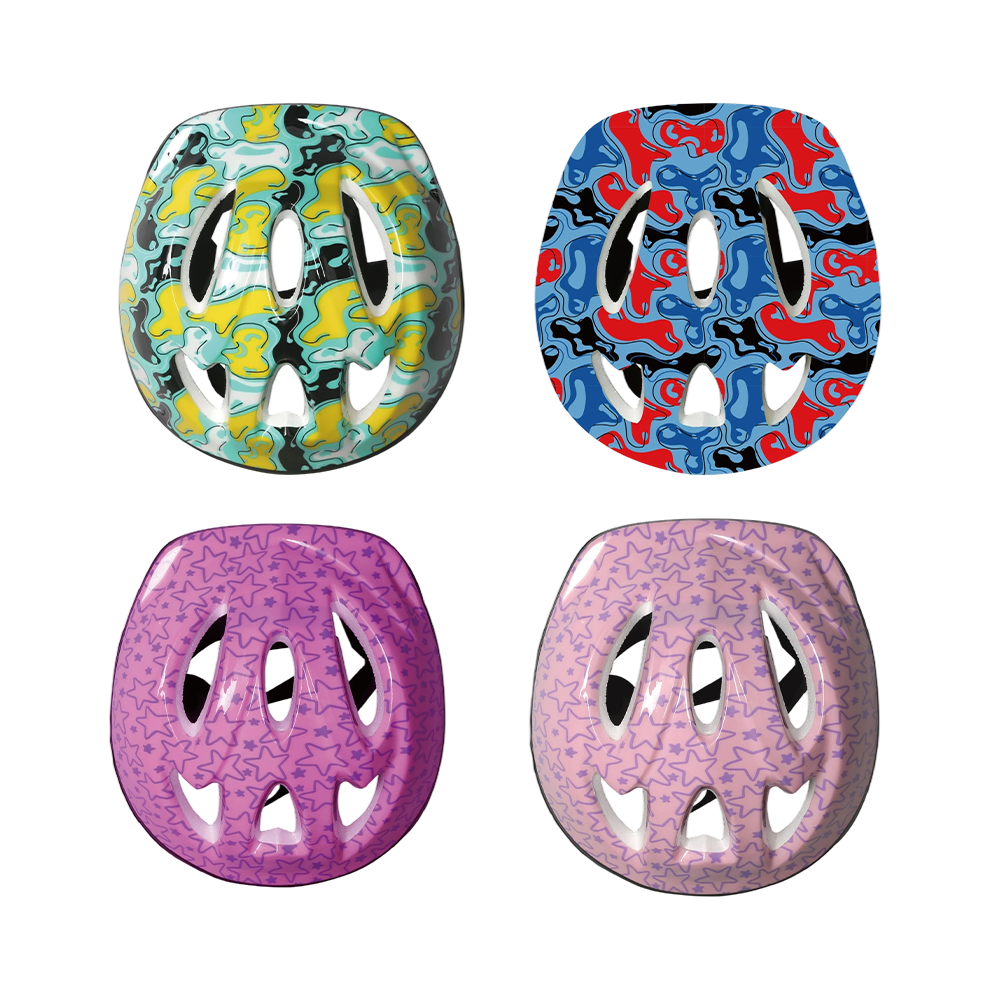 BW-012 Strong EPS Children's Helmet with PVC ShellA lightweight PVC-shell, high-density EPS helmet with vents and multiple colors for children's cycling and light recreational use.View Product →
Pads and Guards: Fit Decides Whether They Protect
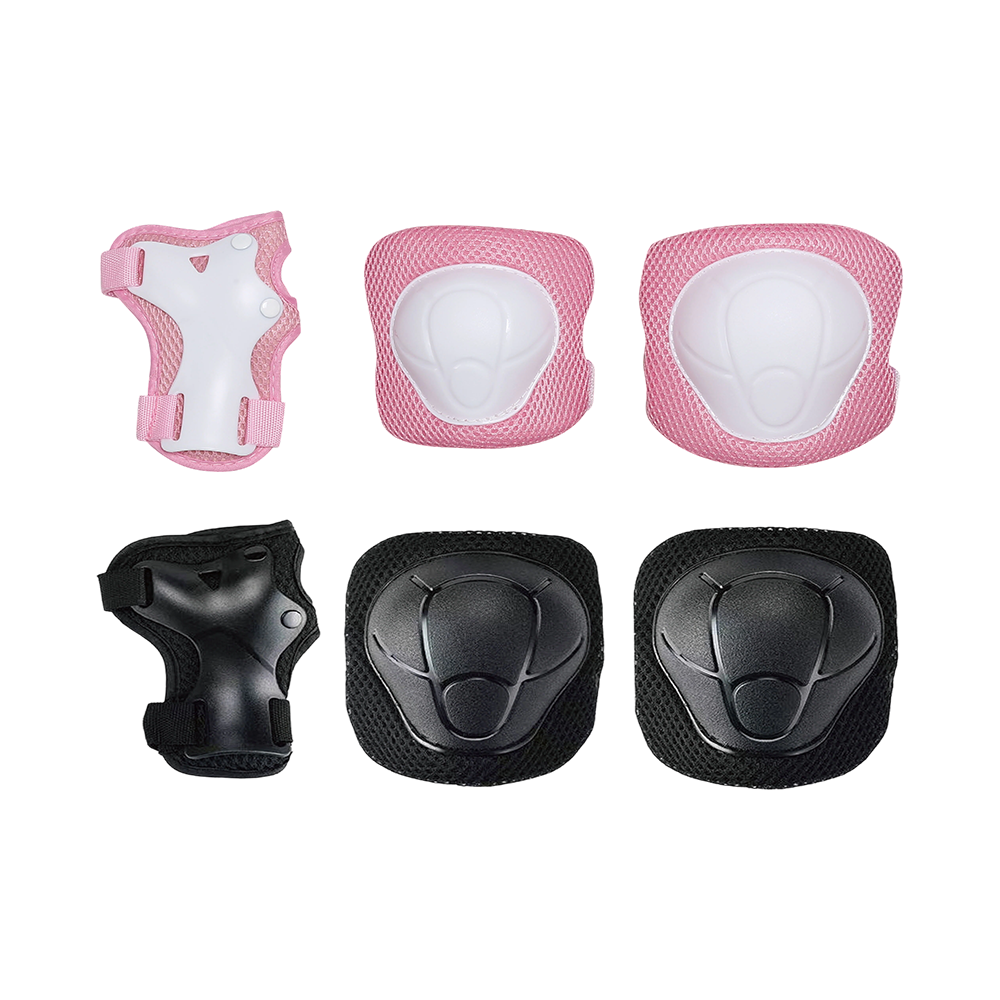
Knee and elbow pads usually fail in a predictable way — they slide. A pad that has rotated 30 degrees on impact exposes exactly the joint it was purchased to protect. The fix is rarely "more plastic." It is a better closure system, a shaped rather than flat cap, and a liner that grips the skin or fabric instead of gliding over it.
Material choice then follows the use case. EVA and high-elasticity foam hold their shape through repeated low-energy impacts and stay comfortable across a long session; hard caps resist abrasion on asphalt. For multi-sport use across scooter, skate, and skateboard, adjustable elasticity lets one size carry a growing child through a season, and breathable backing is the difference between a pad that is worn in July and one that stays in the bag.
Watch for the quiet cost drivers as well: stitching at strap anchors, hook-and-loop tape that loses grip after 200 cycles, and foam that compresses permanently when stored under load in a hot container.
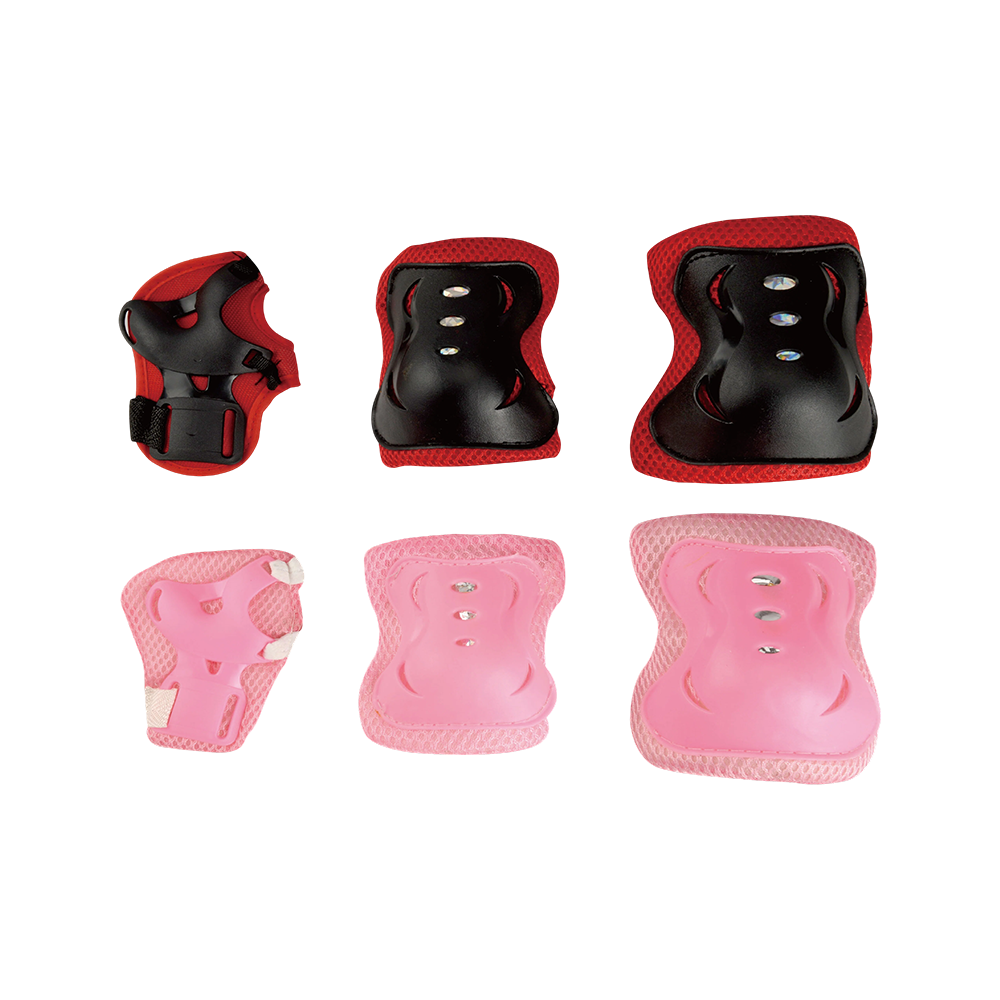 BW-02 EVA Foam Cotton Protective PaddingHigh-elasticity EVA and foam cotton padding in XS offers shock absorption and soft, non-slip cushioning for protective-gear linings and packaging.View Product →
Buying a Complete Set: The Checklist That Saves Returns
Sets are where quality gaps hide, because a buyer approves the helmet and inherits the pads. Before confirming a purchase order, work through the following:
- Name the standard per component, not per carton — helmet, pads, and skates each carry their own requirement.
- Match test reports to model numbers, size ranges, and production dates, and keep a signed copy on file.
- Confirm the age band and adjustment range actually fit the same child, so the set is wearable out of the box.
- Agree labeling: age grading, warnings, batch code, and importer details must survive the market's inspection regime.
- Retain a golden sample and specify pre-shipment inspection with an AQL level you can defend.
- Ask about spare buckles, straps, and wheels — replaceable parts extend product life and cut warranty claims.
One more point that experienced buyers raise early: bundle the protection with the skate rather than selling it separately. A beginner inline skate shipped with matching knee, elbow, and wrist guards removes the guesswork for the end customer and reduces the chance that protection is bought late, or not at all. Our guide to choosing sports protective gear covers the sizing and material trade-offs in more detail.
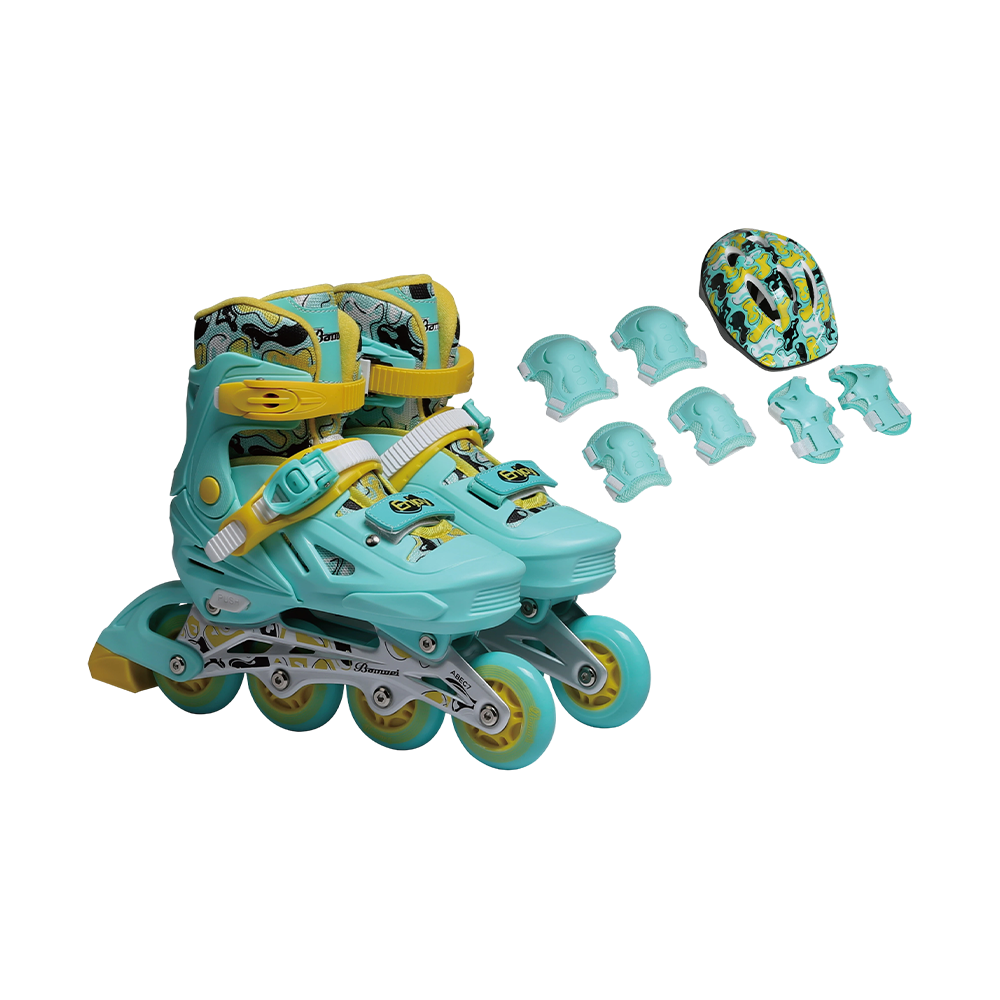 BW-220 Children's Inline Skate Set with ProtectorsA beginner-focused children's inline skate set with helmet and knee, elbow, and wrist guards, bundling fall protection for recreational skating.View Product →
Verify the Factory, Not Just the Sample Room
A sample room is a curated environment. Production is not. The question that matters is whether the process that produced your approved sample is the same process running on the line in month nine.
What to look for when you audit: an operating ISO 9001 quality system with documented incoming inspection; social compliance audits such as BSCI with current validity; and in-house control over the critical steps. A factory that owns its mold shop, injection molding, sewing, and assembly can hold tolerances on shell thickness and strap anchors that a trading company sourcing from three workshops cannot. Scale helps here — 20,000 square meters of workshop and multiple automated assembly platforms make batch consistency easier to sustain than a small manual line does.
Ask specifically how failures are traced. Batch coding on the shell, a retained sample per lot, and a documented response when a strap-pull or drop test fails are more informative than any brochure claim about quality management.
FAQ
Is CE marking on its own enough to prove safety?
No. CE is a declaration that the applicable directives were met, and its value depends entirely on the test evidence behind the declaration. Ask for the underlying reports and the signed declaration of conformity, and check that the model and size range match your order.
How often should a helmet be replaced?
After any hard impact, immediately — the EPS liner is single-use by design. Without an impact, most manufacturers advise replacement every three to five years, because adhesives and foams age, and because storage in a hot car or a humid warehouse accelerates that aging.
Why do cheaper pads feel fine in the sample room and fail in the field?
Because comfort and durability are measured differently. A soft foam feels good on day one; what matters is compression set after repeated loading, tape grip after hundreds of open-and-close cycles, and whether stitching at the strap anchor holds when a child pulls the pad on by the strap instead of the shell.
What documents should a shipment to the United States include?
Typically a Children's Product Certificate supported by third-party testing to the applicable ASTM toy or sports standard, plus tracking labels and correct age grading. Light-up features add battery and electrical documentation on top of that.
Trusted safety gear and protective equipment is a documentation problem before it is a design problem. Specify the standard per component, demand reports that name the model and date, inspect the liner and the closures as carefully as the shell, and audit the line that will actually run your order. Buyers who do those four things rarely argue about returns.
If you are building a scooter, skate, or protection range for the 2027 season, send the target market, age band, and standard requirements through our contact page and we will match them against existing tooling before quoting.
Recommended Articles

Get in Touch
Your email address will not be published. Required fields are marked *
Have a project in mind? Contact with us!
We are happy to answer your questions. Please fill out this form
and one of our professional team will get back to you as soon as possible.

We specialize in producing various types of children's toy cars, children's skateboards, and ice skates.
