
 En
En
 Español
 русский
 عربى
عربى
China Safety Gear & Protective Equipment: A B2B Sourcing Guide for Youth Riders
Date:Sep 25, 2026
Content
- 1 Two Supply Chains Share One Search Term
- 2 The Standards That Decide Whether Your Container Clears Customs
- 3 Where Budget Helmets and Pads Actually Fail
- 4 Factory Capability: What to Verify Beyond the Certificate
- 5 Matching the Kit to the Ride
- 6 Order Planning: Lead Time, Tooling, and Ready-to-Ship
- 7 Frequently Asked Questions
The order that goes wrong is rarely the one with a bad sample. It is the one where the helmet cartons read EN 1078, the purchase order was written against CPSC 16 CFR 1203, and nobody notices until the customs broker asks for the test report that names the model number on the box.
China remains the world's largest source of youth helmets, pad sets, children's scooters, inline skates, roller skates, and ice skates. The manufacturing depth here is genuine. Depth, however, is not the same as fit. Three things decide whether a container of safety gear sells through or comes back as a claim: standards mapping, sizing logic, and whether the factory actually owns its tooling, moulding, sewing, and assembly lines.
This guide walks through those three items from the manufacturing side of the trade, using the product families that matter for children's wheeled sports.
Search for China safety gear and protective equipment suppliers and most results describe industrial PPE: work gloves, hi-vis vests, respirators, hard hats, ear plugs. That market has its own standards, its own buyers, and its own compliance language.
Youth wheeled-sports protection is a different supply chain entirely. The buyer is an importer or a retail brand, the end user is a five-year-old on a scooter, and the compliance conversation is about impact absorption, toy safety, and age grading rather than respirator fit testing. Importers who shortlist from industrial PPE directories usually spend a month discovering this.
The category mix is also wider than most first-time buyers expect. A single factory in the Ningbo-Yuyao manufacturing belt can supply six families that share foam, webbing, plastic shells, bearings, and packaging:
- Inline skates 40
- Children's scooters 16
- Ice skates 13
- Roller skates 9
- Helmets 6
- Protective gear 6
That shape matters commercially. Split those six families across four suppliers and you inherit four compliance files, four foam specifications, four carton designs, and four sets of tooling that nobody can move when a model is discontinued.
The Standards That Decide Whether Your Container Clears Customs
Certificates are cheap to print and expensive to get wrong. Agree the exact standard, the age grade, and the destination market before the pre-production sample is signed off, and insist that every test report carries the specific model number being shipped.
| Product family | Standards usually requested | Primary market |
|---|---|---|
| Children's scooters | EN 71-1/-2/-3, EN 62115 for electrical parts, ASTM F2264, 3C | EU, US, China |
| Inline skates | EN 13843:2009, CPC for US children's products, 3C | EU, US, China |
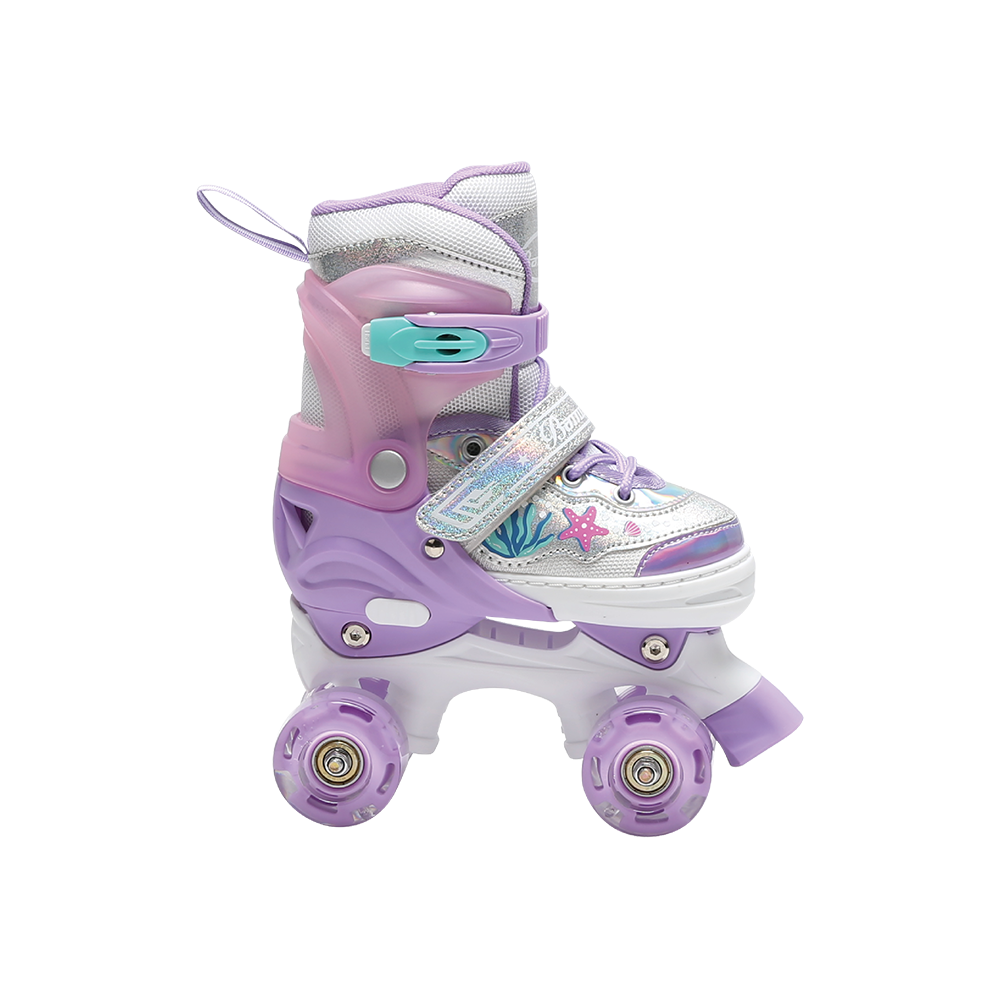
| Roller skates (quad) | EN 13843, or EN 71 when sold as a toy | EU, US |
| Helmets | EN 1078, CPSC 16 CFR 1203 for cycling use, ASTM F1492 for skate use, 3C | EU, US, China |
| Knee, elbow, wrist sets | EN 14120 for roller sports, EN 71-3 for material migration | EU |
| Ice skates | Buyer-specified blade retention, boot stiffness and corrosion tests, 3C | EU, US, China |
Inline skates show why the detail matters. EN 13843:2009 is a product-specific standard covering chassis strength, wheel retention, edge geometry, and braking behaviour. It is not interchangeable with EN 71 toy testing, even when both pages sit in the same supplier's certificate folder. A skate developed against EN 13843 has different axle, wheel, and boot construction from a toy-grade unit, and the report should be traceable to the exact model you are buying.
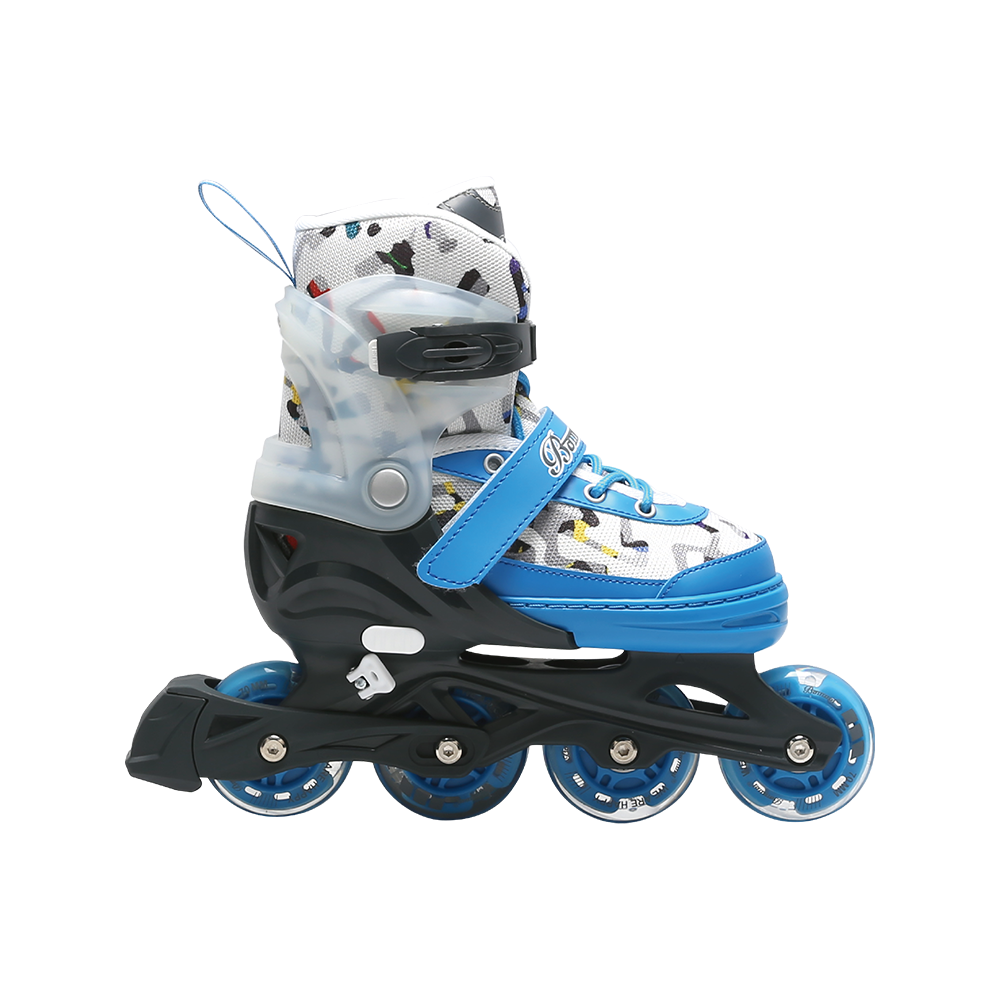 BW-230-5 EN13843 Inline SkateThe BW-230-5 EU standard certified inline skates have passed the strict European EN 13843 professional inline skating safety certification. From materials and structur...View Product →
The same discipline applies to helmets. A model assessed under EN 1078 for the European market and a model assessed under CPSC 16 CFR 1203 for cycling use in the United States are not automatically the same product with a different label.
Where Budget Helmets and Pads Actually Fail
Claim-stage failures are usually not dramatic. They are the accumulation of small manufacturing decisions that saved a few cents per unit:
- EPS liner density and wall thickness trimmed until impact absorption sits close to the pass threshold.
- Webbing anchors and buckles that release or slip under load and vibration.
- Rear occipital coverage reduced in cheaper moulds, leaving the base of the skull exposed on a backward fall.
- Pad foam that feels firm in the box and compresses permanently after two weeks of skating.
- Stitching that fails at the wrist-guard splint pocket, which is exactly the point that takes the load on an outstretched hand.
- Sizing bands that promise three to ten years from a single elastic length and fit nobody properly.
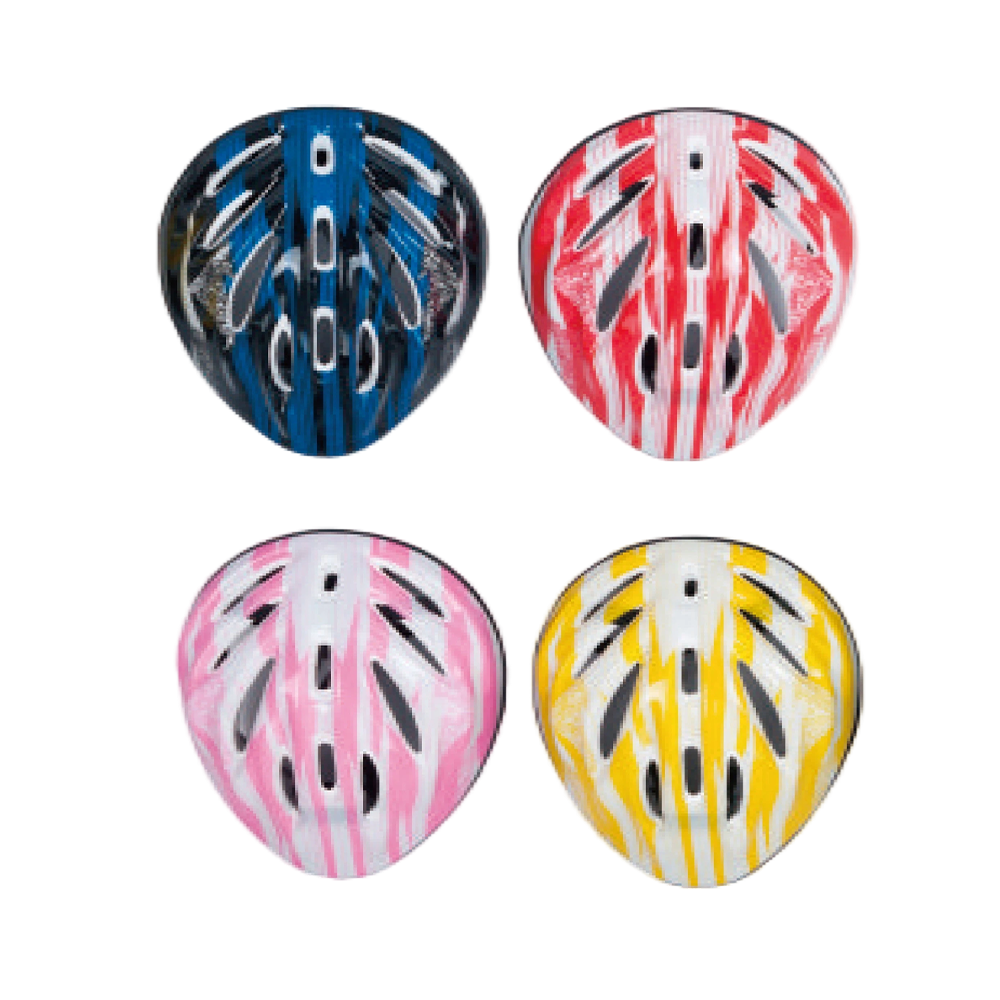 BW-015 High Density Eps Inner HelmetThe BW-015 is a high-density EPS (expanded polystyrene) lined helmet designed specifically to enhance head protection. It utilizes advanced in-mold molding technology,...View Product →
A helmet liner built on high-density EPS with a full-coverage mould costs slightly more at the factory gate and considerably less than a recall, a chargeback, or a retailer delisting the line.
Factory Capability: What to Verify Beyond the Certificate
An ISO 9001 certificate confirms that a quality system exists. It says nothing about who owns the mould, who runs the injection machine, or whether the sewing line is upstairs or three provinces away.
- Tooling ownership. Ask which party holds the mould, where it is stored, and what happens to it if you move production.
- In-house processes. Mould making, injection moulding, sewing, and assembly under one roof shorten the loop between a problem and a fix.
- Capacity. Roughly 20,000 square metres of workshop, more than 200 staff, and five automated lines support both repeat orders and seasonal peaks.
- Social compliance. ISO 9001, BSCI, and retailer factory programmes such as the Kmart audit cover the conditions a large chain will verify before listing your SKU.
- Sample discipline. Agreed AQL levels, sealed pre-production samples, and batch reports dated against the shipped lot.
For a deeper look at how pad sets are specified and tested, our guide to choosing sports protective gear breaks the components down by material and function.
Matching the Kit to the Ride
Protection sells as a kit, not as single items. Retailers that present helmets and pad sets together see higher attachment rates, and buyers who plan the combination early get consistent colourways across families.
| Activity | Typical age band | Recommended protection |
|---|---|---|
| Scooter riding | 3 to 6 years | Helmet, knee pads, elbow pads |
| Beginner inline skating | 5 to 8 years | Helmet, wrist guards, knee pads, elbow pads |
| Freestyle or park skating | 8 years and above | Helmet, full pad set, wrist guards with splint |
| Indoor or outdoor ice skating | 4 years and above | Helmet, wrist guards |
| Quad roller skating | 6 years and above | Helmet, knee pads, elbow pads |
Sizing is where returns originate. Adjustable pad sets with elastic straps and hook-and-loop closures cover a wider age range than fixed shell sizes, and adjustable dial helmets reduce the number of SKUs a retailer has to stock. Check the stated adjustment range against actual measured fit, not against the age printed on the packaging.
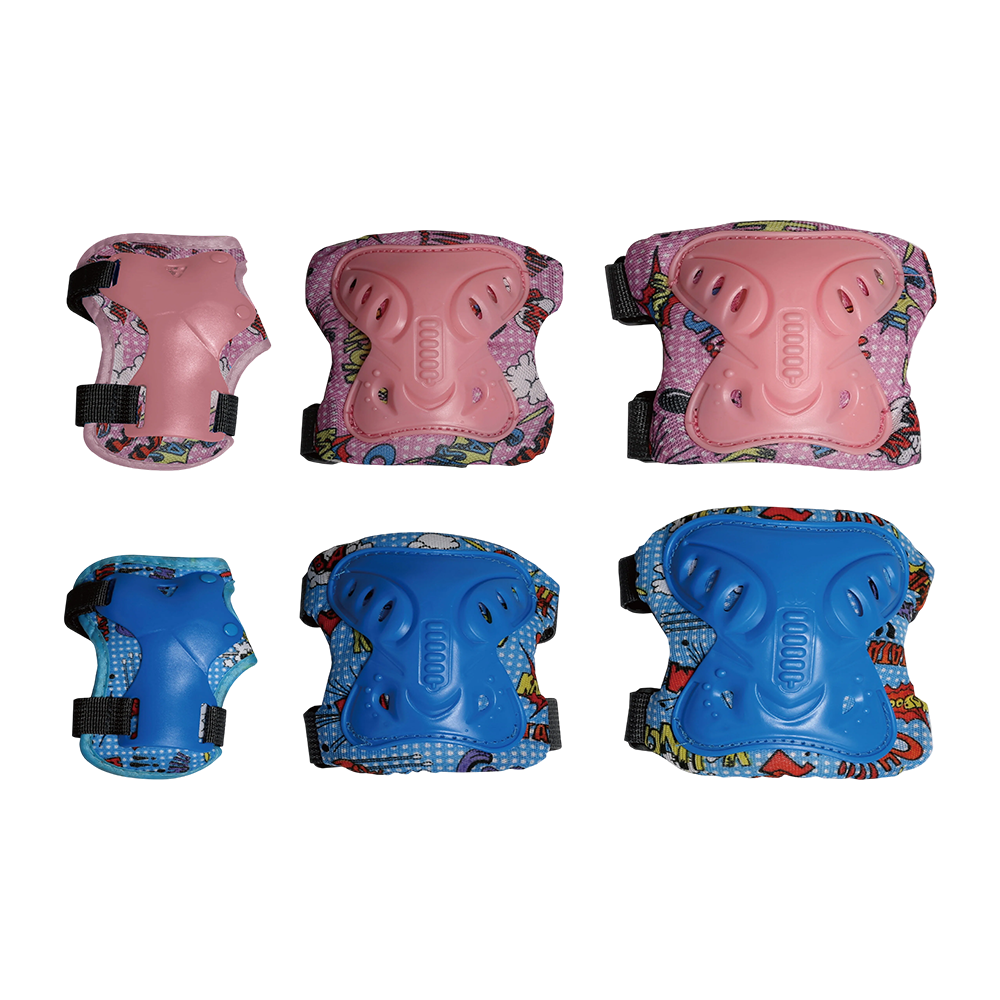 BW-06 Adjustable Elasticity ProtectorThe BW-06 Adjustable Elasticity Protector is a protective gear designed specifically for certain body parts, combining the advantages of rigid protection with a flexib...View Product →
Order Planning: Lead Time, Tooling, and Ready-to-Ship
Lead time is negotiated last and hurts first. Planning bands for export orders from this region generally look like the chart below.
Two levers compress that timeline. The first is stock. A ready-to-ship programme lets a buyer test a colourway or a market with a small order instead of committing to tooling. The second is tooling ownership: when a supplier already holds moulds for a similar shell or pad shape, a new model is a modification rather than a build from zero.
Minimum order quantities follow the same logic. Helmets and moulded shells carry higher MOQs because the tooling dominates the cost; pad sets, which rely on standard foam, webbing, and elastic, can start lower and often only the fabric print and packaging drive the minimum.
Frequently Asked Questions
Do children's helmets need CE marking in the EU?
Protective helmets fall under the EU PPE Regulation, and EN 1078 is the standard that gives presumption of conformity for cycle and skate helmets. Where a helmet ships as part of a toy set, toy-safety expectations can also apply to parts a child might mouth. Confirm the route with your test laboratory before tooling is cut, not after.
What MOQ should I expect for a pad set?
Because pad sets use standard foam and webbing, the binding constraint is usually colour and packaging rather than the product itself. A few hundred units per colour is common for custom printing, and stock colours can go lower.
How do I tell a factory from a trading company?
Ask for the mould list and who owns it, ask for a live walk-through of the injection and sewing areas, and check that the address on the social audit report matches the address on the contract. Trading companies can supply good product; they simply cannot change a shell geometry on short notice.
Can one supplier cover scooters, skates, helmets and pads?
Yes, and there are real advantages: shared foam, webbing, bearings, carton specifications, and a single compliance file. Keep the quality plans separate, though. Helmet impact testing and skate chassis testing are different disciplines and need separate inspection checkpoints.
Start with the standard, then the age grade, then the kit. Request test reports that name the exact model, verify who owns the tooling, and run your first order through stock or a modest repeat production run before committing to a new mould.
Handled in that order, sourcing safety gear from China stops being a gamble on paperwork and becomes a manageable production plan.
Recommended Articles

Get in Touch
Your email address will not be published. Required fields are marked *
Have a project in mind? Contact with us!
We are happy to answer your questions. Please fill out this form
and one of our professional team will get back to you as soon as possible.

We specialize in producing various types of children's toy cars, children's skateboards, and ice skates.
