
 En
En
 Español
 русский
 عربى
عربى
Custom Adjustable Roller Skates: A Wholesale Buyer's Guide to OEM Sizing Specs
Date:Oct 02, 2026
Content
- 1 What "Custom" and "Adjustable" Mean on a Purchase Order
- 2 Four Adjustment Mechanisms, Four Risk Profiles
- 3 Specification Checklist Before You Approve a Sample
- 4 What Changes Cheaply and What Needs Tooling
- 5 Extending One Adjustable Platform to Inline Models
- 6 Certificates Decide Which Markets You Can Sell Into
- 7 MOQ, Lead Time, and When Stock Beats Custom
- 8 Where the Money Goes in a Mid-Range Adjustable Skate
- 9 Common Questions from Buyers
A skate that stops fitting four months after purchase is the most expensive return a children's retailer can carry. That is why adjustable sizing has moved from a bonus feature to a baseline requirement in the kids' roller skate category, and why "custom" and "adjustable" now land on the same purchase order as two separate problems.
The short answer: in a wholesale program, custom almost always means colour, branding, wheel grade and packaging configuration, while adjustable refers to the sizing mechanism built into the shell. Fix the mechanism first. Decoration can be changed on a later run at minimal cost; a rail that slips after six weeks cannot.
What "Custom" and "Adjustable" Mean on a Purchase Order
Two very different supply chains hide behind one word. A true bespoke skate is built around a single skater: the foot is scanned or cast, the last is modified, the boot is hand-lasted, and the finished pair costs several times a stock model with a lead time measured in weeks. That is a workshop business, not a container business.
OEM custom is configuration work, and it is what nearly every wholesale program means. Starting from an existing adjustable platform you can specify shell and strap colours against a PMS reference, print or emboss a logo, choose wheel hardness and diameter, step the bearing grade up or down, change the insole, and control packaging artwork, carton print, hangtag and manual language.
Adjustable is the mechanical half of the request. A well-designed adjustable roller skate covers three to four shoe sizes on one chassis, often EU 29 to 33 in a single SKU, and the children's roller skate market keeps expanding as that coverage reaches more retail shelves. For a buyer, one SKU spanning a wide age band means less shelf space and fewer gift-purchase mistakes.
Four Adjustment Mechanisms, Four Risk Profiles
Most complaints about adjustable skates trace back to the release mechanism, not the shell. The four designs below cover the overwhelming majority of what ships today, and each one fails in its own way.
| Mechanism | Size coverage | Step size | Price position | Main failure mode |
|---|---|---|---|---|
| Push-button release with metal rail | 3 to 4 sizes, e.g. EU 29 to 33 | 5 mm increments | Entry to mid | Rail wear, button spring fatigue |
| Rotary dial or twist knob | 2 to 3 sizes | Continuous | Mid to premium | Cable stretch, dirt ingress |
| Hook-and-loop strap with buckle | 2 sizes | Coarse | Entry | Strap fray, buckle cracking |
| Fixed shell with insole shims | 1 size | None | Entry | Sizing complaints, high return rate |
When you evaluate a sample, do not stop at pressing the button. Lock the mechanism, load the skate with the rider's weight and rock it side to side. Then cycle the release by hand until the action feels different from the first press. That point is your realistic service life, and it is worth measuring before you commit to 5,000 pairs.
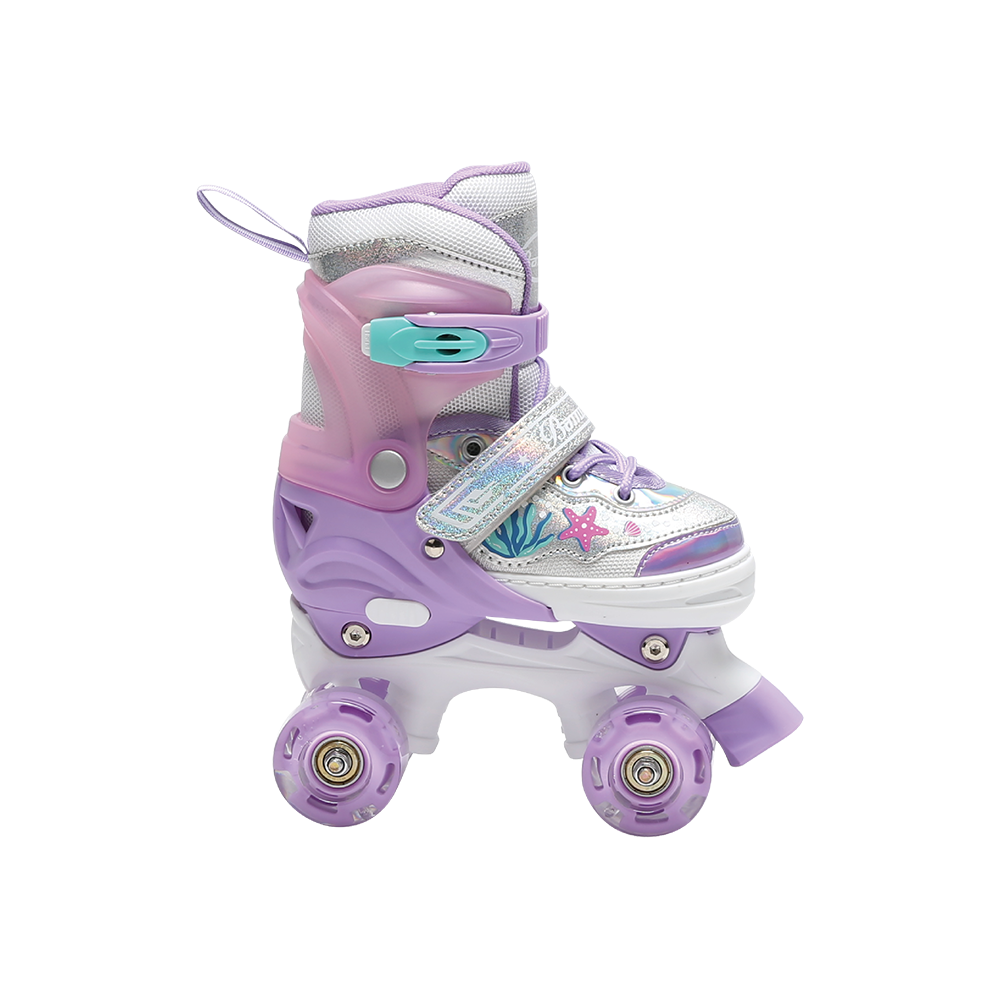
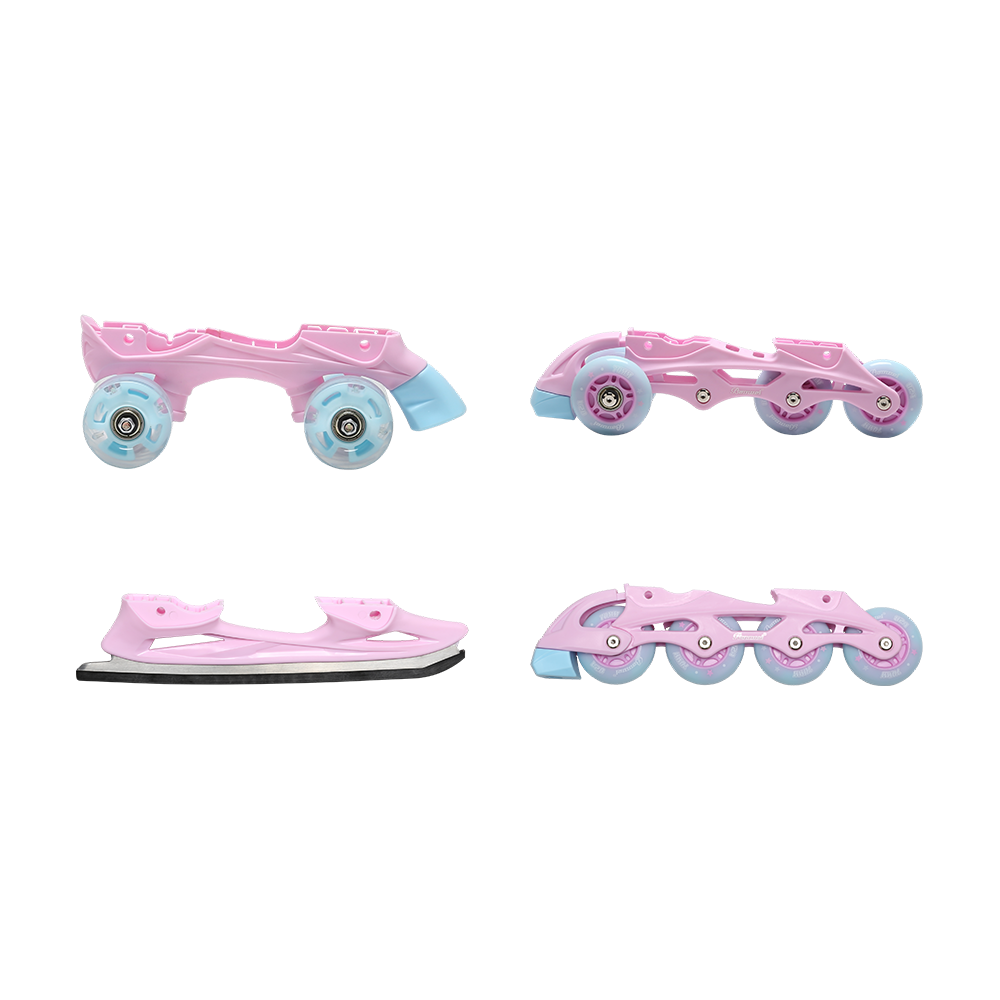 BW-125-A 4 In 1 Roller SkateThe BW-125-A girls' 4-in-1 multi-functional roller skates feature a single shoe with interchangeable bases, eliminating the need to buy multiple pairs of equipment. Th...View Product →
Specification Checklist Before You Approve a Sample
A gold sample is the cheapest place to catch a problem. Work through this list with the factory in writing rather than verbally.
- Shell material and wall thickness: PP or ABS, with the thickness stated on the spec sheet
- Chassis: aluminium where stiffness matters, reinforced plastic for entry price points
- Bearings: ABEC-7 chrome steel is a sensible mid-tier; carbon steel costs less and tolerates moisture less well
- Wheels: PU, with diameter and durometer written down, since 78A to 85A covers most children's use
- Closure system: buckle, strap or lace, and whether a parent can replace it
- Brake: fitted, replaceable, and shaped so it does not catch on curbs
- Weight: inside the range the target age group can actually carry
- Packing: carton drop-test result and polybag labelling that satisfies the destination market
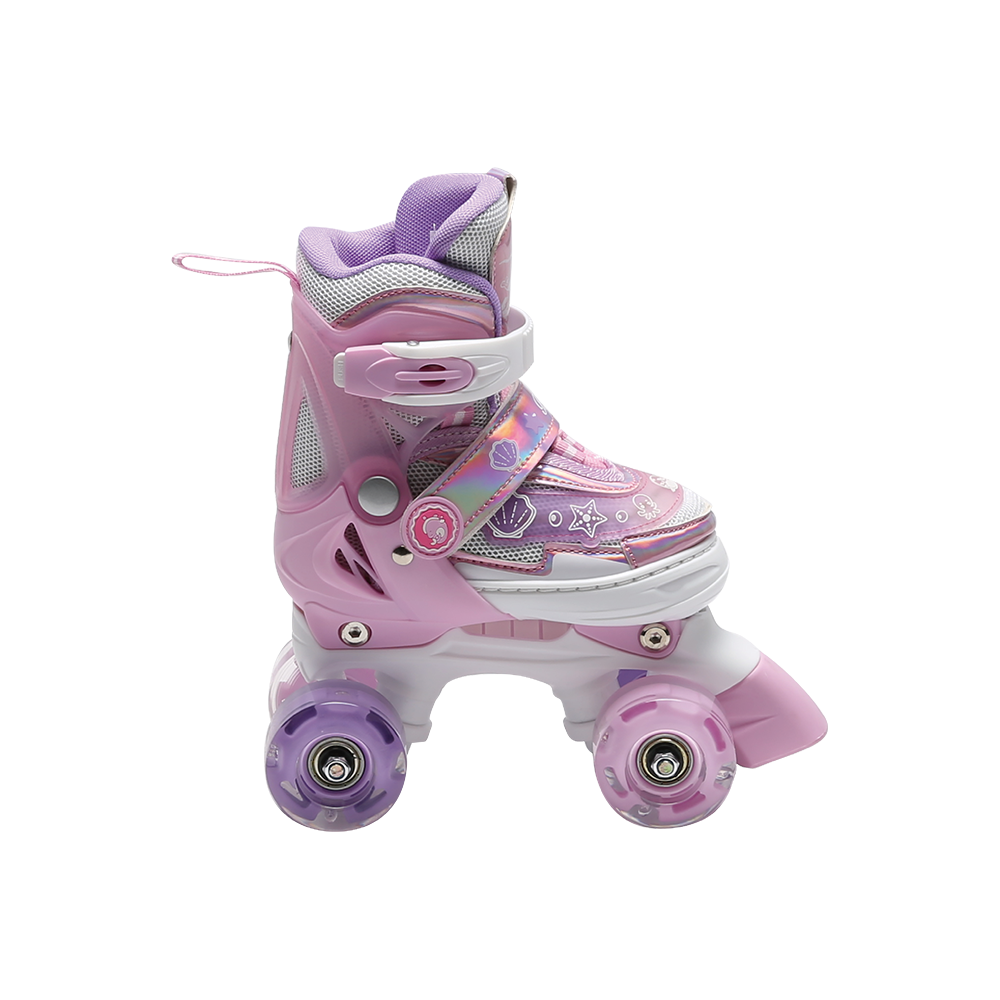
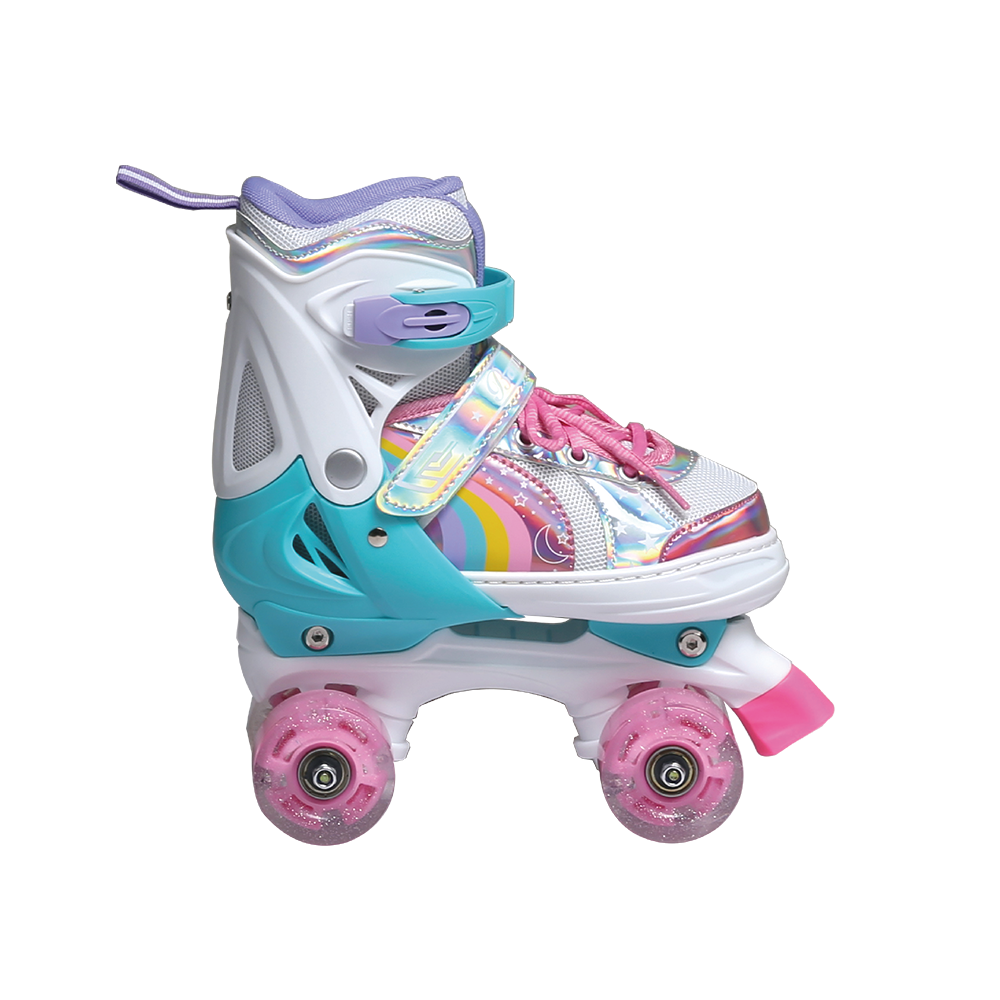 BW-211 ABEC-7 Bearing Roller SkateThe BW-211 ABEC-7 Bearing Roller Skate is a pair of double-row roller skates specifically designed for children and teenagers, emphasizing a high-precision skating exp...View Product →
What Changes Cheaply and What Needs Tooling
Customization briefs tend to grow because buyers assume every change is a print change. About half of them are not.
- No tooling: shell, strap and wheel colours via masterbatch; pad printing or embossing; wheel diameter and hardness; bearing grade; insole and brake hardware that reuse existing mounting points; retail packaging, carton, hangtag and manual
- Tooling required: a new shell size or a different adjustment range; a custom chassis profile; new rail geometry; a new wheel hub; bespoke buckle or strap hardware
Colour drift is the quiet cost. Keep a signed retained sample and agree a written tolerance, with a Delta E of 1.0 to 2.0 between runs as a workable target. Masterbatch batches move, and the difference only becomes visible when last season's stock sits next to this season's.
Extending One Adjustable Platform to Inline Models
Many children's programs sell roller skates and inline skates side by side, and buyers often pay twice for what could be a single development effort. Sizing mechanisms, buckle hardware, wheel compounds and packing formats can frequently be standardized across both categories. The adjustable kids inline skate here follows the same design logic as the roller line, which shortens sampling and keeps spare-part handling simple at retail.
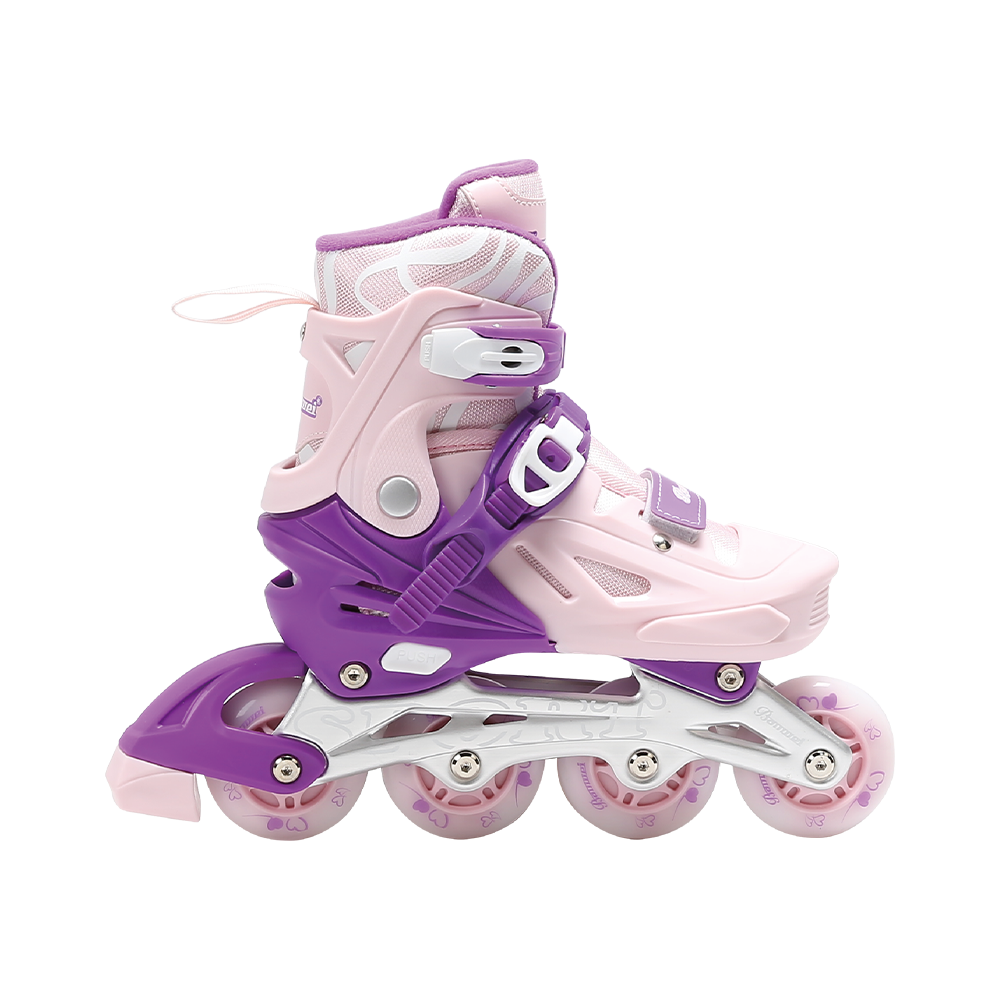
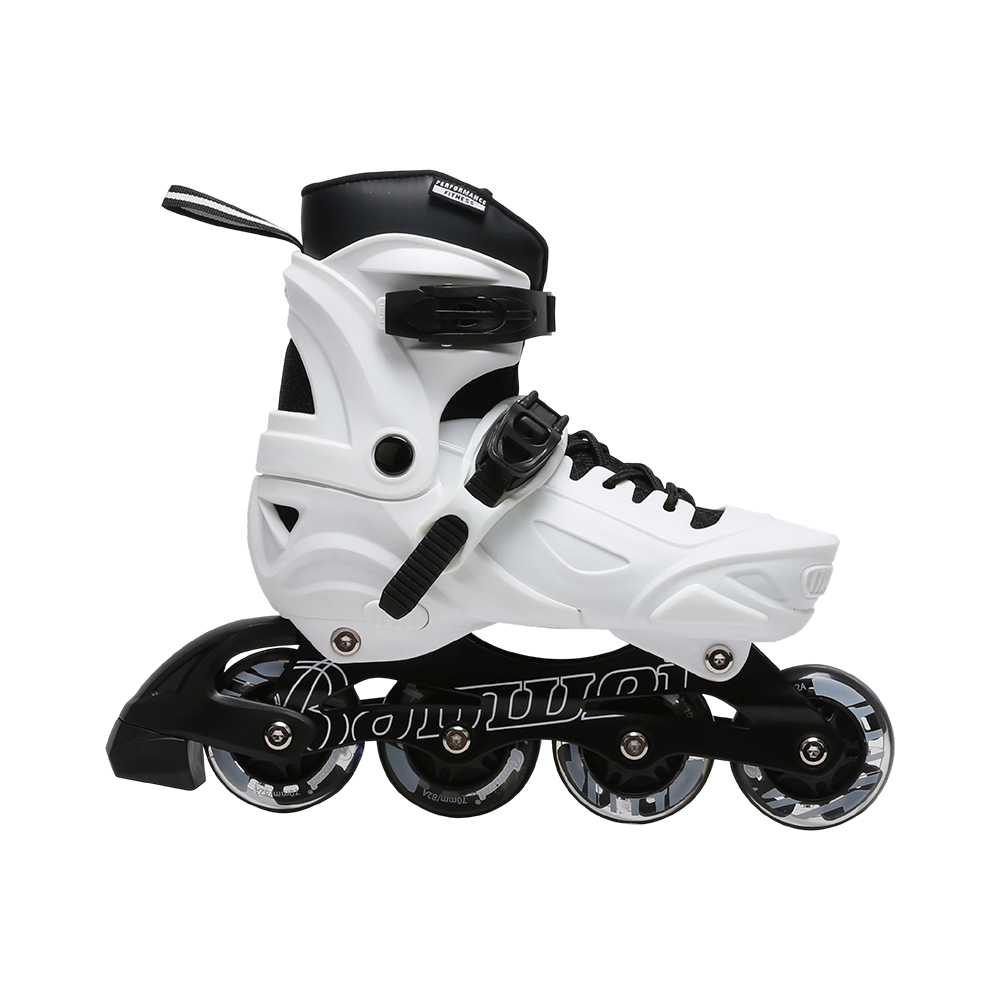
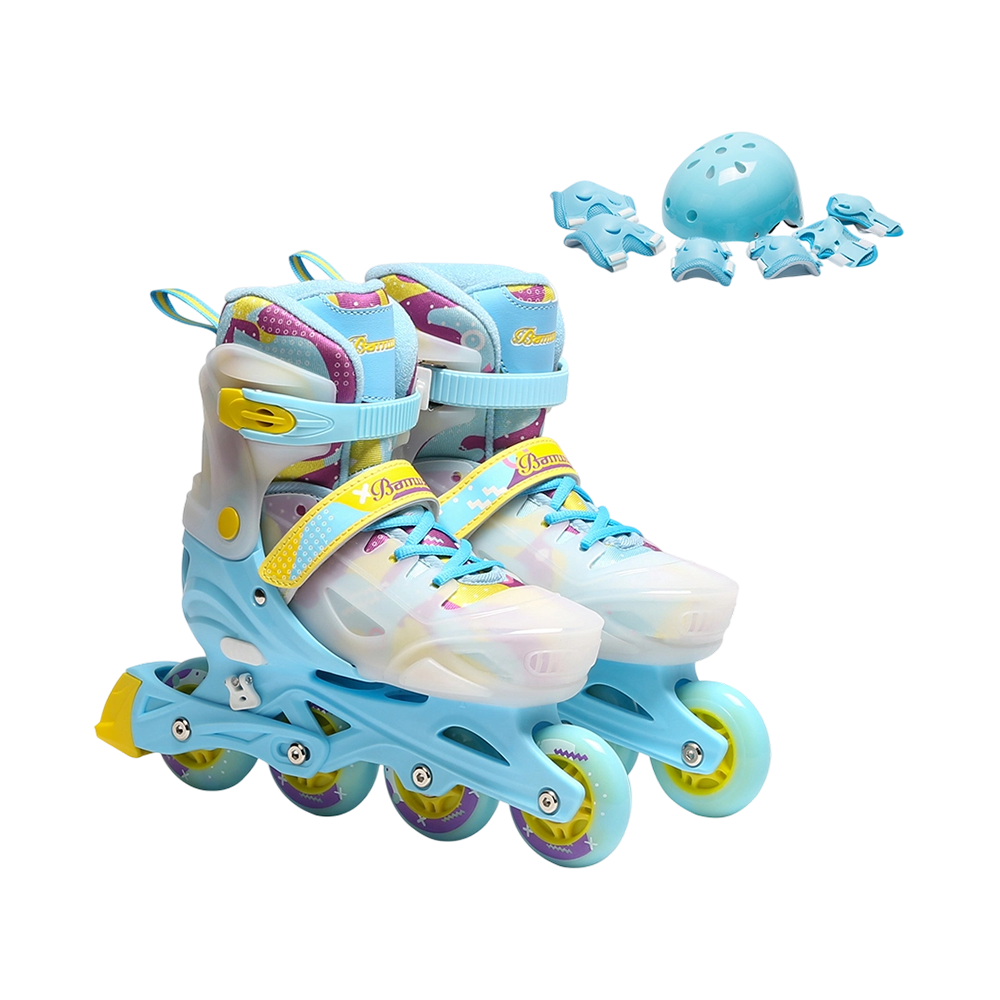 BW-230 Adjustable Inline SkateThe BW-230 Adjustable Inline Skate is an adjustable inline skate designed specifically for children. It combines safety and fun, suitable for children of all ages.View Product →
Certificates Decide Which Markets You Can Sell Into
Certification is where a good sample becomes a marketable product, and it is worth checking at the model level rather than the factory level.
- Factory systems: ISO 9001, BSCI social audit and retail-driven factory audits
- Europe: CE marking, EN 71 toy safety, EN 13843:2009 for inline skates, EMC where lighting or electronics are fitted
- North America: ASTM testing and CPC documentation for children's products
- China: 3C for domestic sale, plus EN 62115 on electrically powered models
The practical step is simple: ask for the certificate and match the model number printed on it to the SKU on your purchase order. A certificate belonging to a sibling model will not help you at customs or in a recall.
MOQ, Lead Time, and When Stock Beats Custom
A customized adjustable skate is not slow by nature; tooling and approvals consume the calendar. For a program using existing moulds, a 500 to 1,000 pair order typically moves through the stages below. If the adjustment range itself is new, add four to six weeks and a tooling charge before any of it starts.
Illustrative timeline for a 500 to 1,000 pair custom order on existing moulds.
When the selling season starts sooner than that, or when you need trial quantities for a new channel, stock is the faster route: the factory holds scooters and inline skates in ready-to-ship stock for orders that cannot wait for a production slot. Treat stock as the bridge to your first custom run rather than a replacement for it, because the margin story only starts once your own specification is in the box.
Where the Money Goes in a Mid-Range Adjustable Skate
Buyers often push hardest on the parts that carry the least cost. The split below is illustrative, but the shape is consistent across quotes; the percentages move with wheel size, chassis material and order volume.
- Boot shell 32%
- Chassis 22%
- Wheels 18%
- Bearings 11%
- Straps & hardware 9%
- Packaging 8%
Illustrative unit-cost split for a mid-range adjustable children's roller skate.
Two takeaways. The shell and chassis together are more than half the unit cost, so a design decision there buys more than renegotiating bearings. Packaging and hardware are roughly a fifth, which makes them cheap to specify badly and expensive to correct once the cartons are printed.
Common Questions from Buyers
How many shoe sizes should one adjustable skate cover?
Three to four is the sweet spot. Two sizes rarely justify the mechanism, while five or more usually means a longer shell that feels loose at the small end.
Is adjustable the same as one-size-fits-all?
No. An adjustable platform still needs a size band on the box and a rider weight limit. Selling it as universal sizing is the quickest way to generate returns.
What is the minimum order for a customized run?
It depends on tooling. Colour, logo and packaging changes on an existing platform can start in the low hundreds of pairs; a new shell size or rail geometry is usually quoted in the low thousands, because the mould cost has to be amortized.
How do I verify quality before full production?
Ask for a gold sample to your specification, then a pre-production sample taken from the actual line. Cycle the adjustment mechanism to failure on your own bench and keep both samples in writing as the shipment reference.
The sequence of decisions matters more than any single specification. Choose the adjustment mechanism and its size range first, lock the shell and chassis around it, and only then spend energy on colours, logos and packaging. Buyers who work in that order end up with a skate that still fits the child in month eight, and with a product page that does not have to explain why last season's version was better.
Recommended Articles

Get in Touch
Your email address will not be published. Required fields are marked *
Have a project in mind? Contact with us!
We are happy to answer your questions. Please fill out this form
and one of our professional team will get back to you as soon as possible.

We specialize in producing various types of children's toy cars, children's skateboards, and ice skates.
